
Size
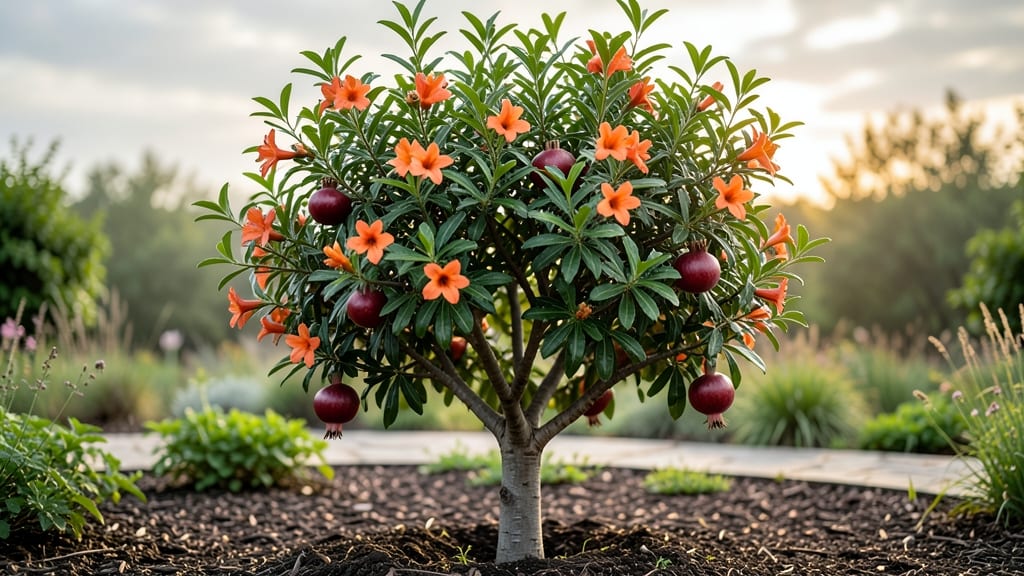
The Russian pomegranate tree size you end up with depends entirely on the variety you choose, ranging from compact 6-foot dwarfs to towering 20-foot giants.
If you're dreaming of a stunning Russian pomegranate tree in your garden but worry about space constraints, understanding its mature size is critical—some varieties grow as small as 8 feet while others can reach towering heights of 20 feet.
This medium-sized tree thrives in USDA Zone 6a, where it can flourish in full sun, but its growth habits vary wildly depending on whether you opt for a dwarf, semi-dwarf, or standard variety.
Below, I’ll break down the size differences, how to manage growth in small spaces, and the best pruning tips to keep your 🍇 Russian pomegranate tree at your desired height.

Russian pomegranate tree size by variety: height and spread comparison
Choosing the right Russian pomegranate tree variety depends heavily on your space and vision. Some varieties stay compact at 6-8 feet, while others grow into impressive 20-foot giants. Knowing these dimensions helps you plan your garden layout or container setup effectively.
I'll break down the most popular varieties, their mature sizes, and growth habits to help you make the best choice for your outdoor space.
Russian pomegranates are cold-hardier than their Mediterranean cousins, making them perfect for USDA zones 6-9. Their mature size varies significantly between varieties, so selecting the right one ensures your tree thrives without overwhelming your yard.
Whether you're dreaming of a patio-sized tree or a backyard centerpiece, understanding these dimensions is key to successful cultivation.
| Variety | Mature Height (ft) | Mature Spread (ft) | Growth Habit | Best For |
|---|---|---|---|---|
| 'Wonderful' | 15-20 ft | 12-15 ft | Upright, spreading | Large gardens, fruit production |
| 'Dante' | 10-15 ft | 8-12 ft | Semi-dwarf, rounded | Medium yards, patio edges |
| 'Moll's Favorite' | 12-16 ft | 10-14 ft | Upright, dense | Ornamental planting, fruit |
| 'Nana' | 6-10 ft | 5-8 ft | Dwarf, compact | Containers, small patios |
| 'Little Leaf' | 8-12 ft | 6-10 ft | Semi-dwarf, bushy | Urban gardens, small spaces |
The 'Wonderful' variety is the most common and grows the tallest, reaching 15-20 feet with a wide spread. This makes it ideal for large gardens where you want both ornamental beauty and fruit production.
Its upright yet spreading growth habit means it needs plenty of space, so avoid planting it near walls or structures unless you plan regular pruning to control its size.
For smaller spaces, 'Dante' is an excellent choice with a semi-dwarf stature of 10-15 feet. Its rounded shape makes it perfect for medium-sized yards or as a patio accent.
I've seen this variety thrive in urban gardens where space is limited but still want that classic pomegranate look and delicious fruit.
'Moll's Favorite' strikes a balance between size and productivity, growing to 12-16 feet with a dense, upright form. This variety is fantastic for gardeners who want a reliable fruit producer without committing to a massive tree. Its compact nature also makes it easier to manage and harvest the fruit without needing a ladder.
If you're working with limited space, dwarf varieties like 'Nana' are game-changers. These stay under 10 feet tall and can even thrive in large containers. I've successfully grown 'Nana' in 15-gallon pots on my balcony, proving that you don't need a big yard to enjoy pomegranates.
Just ensure the container has good drainage to prevent root rot.
The 'Little Leaf' variety offers a middle ground for urban gardeners, reaching 8-12 feet with a bushy growth habit. Its smaller leaves and compact size make it ideal for small yards or even large containers.
This variety is particularly well-suited for gardeners who want a low-maintenance option that still produces abundant fruit.
When planning your garden, remember that these sizes represent mature dimensions, which can take 3-5 years to reach. Young trees grow quickly in their first few years, so monitor their progress and prune as needed to guide their growth.
Regular pruning not only controls size but also improves airflow, reducing the risk of disease and increasing fruit production.
For container growing, always choose a variety labeled as dwarf or semi-dwarf, and select a pot at least 15-20 gallons in size. Place containers in full sun and water deeply when the top inch of soil feels dry.
With the right variety and care, you can enjoy pomegranates even in the smallest of spaces.
🌱
How Russian pomegranate tree size affects garden planning and care
When planning your garden, the Russian pomegranate tree size can make or break your layout. In USDA zones 7-10, these trees typically mature between 10-20 feet tall, but their spread—often 8-12 feet wide—can surprise new growers.
This means you’ll need 15-20 feet of clearance in all directions for a standard tree, while dwarf varieties stay compact at 6-10 feet.
Your climate zone plays a huge role in growth patterns. In warmer zones (9-10), Russian pomegranates grow faster and reach their mature size quicker—sometimes in just 3-4 years.
But in cooler zones (7-8), growth slows, and trees may take 5-7 years to reach full size. This affects when you’ll see fruit, too!
Here’s the key takeaway: size management starts at planting. Choosing the right variety and spacing correctly can save you headaches later. Let’s break down the essentials for planning and care based on your garden’s layout and climate.
🌱 Russian Pomegranate Tree Size Cheat Sheet
Pruning is your best tool for controlling Russian pomegranate tree size. If you’re working with limited space, focus on structural pruning in late winter (before buds swell) to shape the tree and remove suckers at the base.
For fruit production, thin out excessive branches in early spring to improve airflow and sunlight penetration—this keeps the tree healthier and more manageable.
In USDA zone 7, where winters are colder, your tree will naturally grow more slowly. To compensate, avoid heavy pruning in the first 2-3 years—let it establish a strong root system.
In zone 10, where heat is the bigger concern, prune to reduce leaf density and prevent fungal issues from excess humidity. Always use sterilized pruners to avoid disease spread!
For optimal fruit production, spacing is everything. Plant standard trees 12-15 feet apart in rows 15-20 feet apart to allow airflow and easy harvesting. If you’re growing dwarfs in containers, use 15-gallon pots and space them 6-8 feet apart.
Remember, crowded trees produce fewer, smaller fruits due to competition for nutrients and sunlight.
One final tip: Mulch heavily around the base (3-4 inches deep) to retain moisture and regulate soil temperature. This helps slow early growth in warm climates, preventing your tree from becoming too large too quickly.
With the right planning, your Russian pomegranate will thrive—whether you have a small patio or a sprawling orchard! 🌳