
Container Gardens
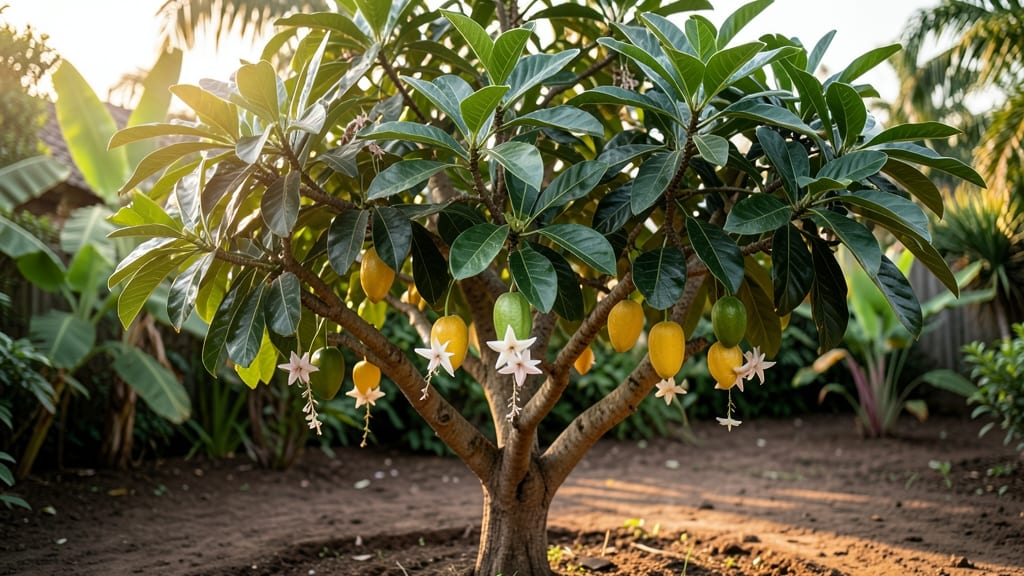
Star fruit trees grow best in USDA hardiness zones 10 through 12, where warm temperatures stay above 30°F year-round. These tropical plants demand full sunlight and fast-draining soil to prevent rot, thriving in subtropical and coastal climates where frost is rare.
These trees are tropical at heart, so even a brief dip below 32°F can damage leaves and fruit. 🌴 In zones 9 or cooler, gardeners often grow them in containers and bring them indoors during winter.
The key is mimicking their natural habitat—think Miami, Hawaii, or southern California—where they produce those signature star-shaped fruits year-round. Without proper warmth, growth slows dramatically, and flowering becomes unpredictable.
For those pushing the limits, microclimates near heat-retaining structures or in sheltered valleys can create 5-10°F warmer conditions than official zone maps suggest. Mulching with 3-4 inches of organic matter also helps insulate roots, while drip irrigation keeps soil consistently moist without waterlogging.
The trade-off? These efforts require more maintenance than letting nature take its course in ideal climates.
💡 In This Article
- USDA Zones for Star Fruit Tree Success
- Microclimate Strategies for Star Fruit Cultivation
USDA zones for star fruit tree success
The star fruit tree, or Averrhoa carambola, is a tropical native that thrives in USDA zones 10-12, where winter temperatures rarely drop below 30°F. This range aligns with regions like southern Florida, Hawaii, and coastal California, where frost is virtually nonexistent.
The tree's cold sensitivity stems from its origin in Southeast Asia and Malaysia, where it evolved in consistently warm, humid environments. Even brief exposure to 32°F can cause leaf burn, while sustained temperatures below 28°F will kill the plant entirely.
What makes these zones ideal isn't just warmth—it's the combination of heat and minimal temperature fluctuations. Star fruit trees prefer 75-90°F daytime temperatures with nighttime lows above 60°F. In zone 10, where winters hover around 40-50°F, trees may survive but produce fewer fruits due to reduced flowering.
The critical threshold is 50°F for extended periods—below this, metabolic processes slow, and the tree diverts energy to survival rather than growth or fruiting. 🌡️
Chilling hours (the number of hours below 45°F) play a surprising role too. While star fruit trees don't require cold periods like apples or peaches, they do benefit from minimal chilling—typically 0-100 hours annually. Exceeding this can trigger dormancy-like states, even in tropical climates.
This is why zone 9 gardeners often see erratic fruiting: the occasional cold snap confuses the tree's natural cycles. The solution? Maintaining consistent warmth year-round, which is why container growing becomes essential in marginal zones.
For those in zones 9a-9b (20-30°F winters), the challenge shifts to protecting the tree from unexpected frosts. Young trees are particularly vulnerable, with their shallow root systems struggling to absorb heat from deeper soil layers.
Mature trees in zone 10 can handle brief dips to 28°F if their roots are well-insulated, but the fruit itself is sensitive—exposure to 35°F or lower can cause pitting or discoloration. This is why commercial growers in southern Florida often use wind machines to circulate warm air during cold fronts.
Soil temperature matters just as much as air temperature. Star fruit roots thrive in soil that stays above 60°F year-round. In cooler zones, this means using black plastic mulch or heat-retaining fabrics to raise soil temps by 5-10°F.
The tree's native habitat features sandy, well-draining soils with high organic content—this prevents root rot, which is the #1 killer of star fruit trees in cooler climates. Without proper drainage, even brief cold snaps can lead to fungal infections that spread rapidly in waterlogged conditions.
One often-overlooked factor is humidity. Star fruit trees prefer 60-80% relative humidity, which helps prevent leaf scorch—a common problem in dry climates like inland California. In zones 10-11, coastal locations naturally provide this moisture through sea breezes, while inland growers may need to supplement with misting systems.
The combination of warmth, humidity, and consistent growing conditions explains why star fruit trees produce 2-3 crops annually in ideal zones, compared to just one in marginal areas. 🌿