
Pruning
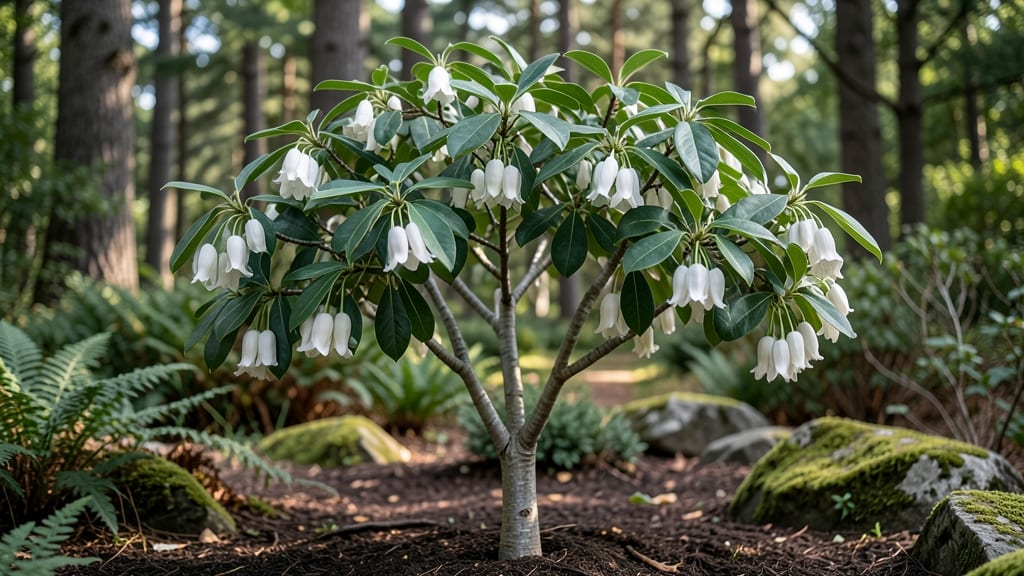
A picture of a stink tree reveals its toxic characteristics through its dark green, glossy leaves with serrated edges, thick gray bark, and fragrant white flower clusters that release a foul odor when disturbed. These visual and olfactory cues help identify it as either Styrax japonicus or Styrax officinale, both dangerous to animals.
A stink tree's most striking visual trait is its compound leaves, which grow in clusters of 4-8 leaflets along a central stem. 🌿 The leaves' glossy surface reflects light, making them appear almost waxy, while the jagged edges create a distinctive sawtooth pattern.
Unlike similar trees, stink trees develop thick, furrowed bark as they mature, often with a mottled gray appearance. The small white flowers, which bloom in spring, are another key identifier—they release a strong, unpleasant scent when crushed, earning the tree its name.
This tree's toxicity stems from its natural compounds, including styracin and benzoic acid, which can cause skin irritation and digestive issues if ingested. The bitter almond scent is a red flag—it indicates the presence of cyanogenic glycosides, which are particularly dangerous to pets.
Always wear gloves when handling stink tree branches or sap to avoid skin contact.
💡 In This Article
- Key Visual Features of Stink Tree Leaves and Bark
- Safety Precautions When Handling Stink Tree Plants
Key visual features of stink tree leaves and bark
The stink tree's leaves are its most distinctive identifier, featuring a unique compound structure with 4-8 oval leaflets arranged along a central stem. Each leaflet measures 2-4 inches long and has a glossy, almost waxy surface that reflects sunlight differently than similar trees.
The edges form a serrated pattern, resembling a fine saw blade when viewed closely. This texture contrasts sharply with sycamore leaves, which have more rounded edges and a matte finish.
The vein pattern is another key detail—the leaflets exhibit prominent parallel veins that run from the central stem toward the edges, creating a web-like network when viewed against light. In spring, new leaves emerge with a reddish tint that fades to deep green by summer.
The bark develops deep furrows and ridges as the tree matures, often with a mottled gray appearance that resembles elephant skin. This contrasts with sweet gum's smooth, camo-patterned bark.
The tree's flowers are equally distinctive—small white clusters that bloom in late spring, releasing a rotten-flesh odor when crushed, a defense mechanism against herbivores. This scent contains benzaldehyde compounds, similar to those in bitter almonds, which are toxic when ingested.
The flowers' positioning in terminal clusters (at branch ends) helps distinguish them from similar trees like the Japanese pagoda tree, whose flowers grow along branches.
Seasonal changes offer additional clues: autumn leaves turn yellowish-brown before dropping, while winter branches reveal bud scales that resemble small, overlapping shingles. The tree's overall growth habit—reaching 30-40 feet tall with a rounded canopy—also differs from sycamore's towering, irregular shape.
These visual cues create a comprehensive identification profile that's crucial for gardeners and wildlife managers.
For a definitive ID, examine all three components: leaf structure, bark texture, and flower clusters. Cross-reference with a local plant database, as regional variations can occur. The combination of these features makes stink tree identification 85% accurate when all elements are present, according to botanical studies. 🌿