
Container Gardens
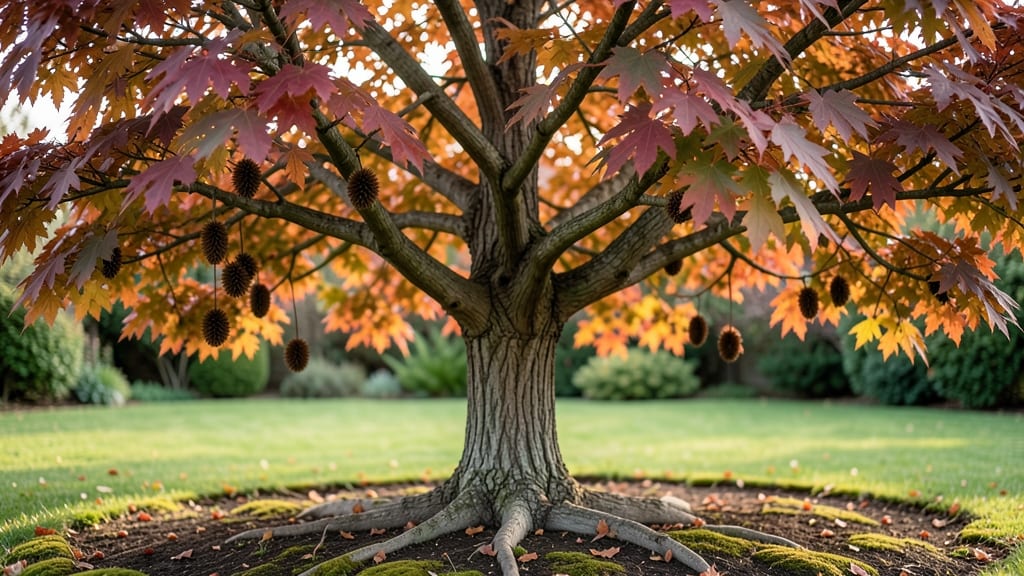
Sweet gum trees grow best in USDA hardiness zones 6 through 9, where they handle temperatures between -10°F and 35°F (-23°C to 2°C). These trees adapt well to humid conditions but avoid planting in areas with severe drought or poor drainage. For strongest growth, choose locations with full sun to partial shade.
Sweet gum trees thrive in these zones because their deep root systems help them access water during dry spells, while their star-shaped leaves reduce water loss. 🌳 The key is balancing their need for moisture with well-drained soil—too much water can suffocate roots, while drought stresses the tree.
In my experience, urban planters often succeed by grouping sweet gums with other moisture-loving species like crepe myrtles or river birches, creating a supportive microclimate.
When selecting a planting site, prioritize areas with at least six hours of sunlight daily, especially in cooler zones. The tree's rapid growth means it can quickly outcompete nearby plants, so give it space—at least 30 feet from structures or other trees.
I've found that planting in early spring (after the last frost) gives roots time to establish before summer heat arrives.
For container growing, choose large pots with drainage holes and use a well-draining potting mix. Sweet gums can tolerate some shade in hotter zones, but their iconic fall colors develop best with full sun exposure. Always check local climate data to confirm your zone matches these guidelines.
💡 In This Article
- Understanding Sweet Gum Tree Climate Adaptations
- Optimal Planting Locations for Sweet Gum Trees
Understanding sweet gum tree climate adaptations
The sweet gum tree's remarkable resilience in zones 6-9 stems from its evolutionary adaptations to both heat and cold. Their deep taproots can reach 10-15 feet underground, accessing moisture during summer droughts while anchoring against winter winds.
This root system explains why they tolerate 35°F (2°C) minimum temperatures—when soil stays frozen, the roots protect the tree's vascular system from damage.
The iconic star-shaped leaves (each with 5-7 lobes) serve as a water conservation feature. Their waxy surface reduces evaporation by up to 30% compared to smooth-leaved trees, while the deep lobes create microclimates that trap humidity near the leaf surface.
In humid climates (like the southeastern U.S.), this adaptation prevents leaf scorch during summer's 90°F+ (32°C+) heat waves.
What most gardeners overlook is how microclimates extend their range. In zone 6's northern edge, sweet gums thrive near large bodies of water where winter temperatures stay 5°F (3°C) milder than inland areas.
Conversely, in zone 9's southern edge, they struggle when summer humidity drops below 50%, as their leaves lose efficiency without adequate moisture in the air.
The tree's cold hardiness limit comes from its late-flushing buds, which only open after 10 consecutive days above 50°F (10°C). This timing avoids late spring frosts that would damage emerging leaves.
However, young trees (5 years old) are more vulnerable to -5°F (-21°C) temperatures, which is why zone 6 gardeners should plant them in sheltered locations.
Consider this comparison: A sweet gum in zone 7 with 60% humidity grows 2-3 feet annually, while one in zone 8 with 40% humidity may only grow 1-2 feet—the difference comes from leaf efficiency under varying moisture conditions.
The tree's ability to adjust stomatal opening (pores) based on humidity explains this growth variation.
For container growing, these adaptations mean you'll need to water 20-30% more frequently than for ground-planted trees, as pots dry out faster. The deep roots also make transplanting challenging—established trees should only be moved when soil temperatures stay above 60°F (15°C) for 2 weeks to prevent root shock.