
Pruning
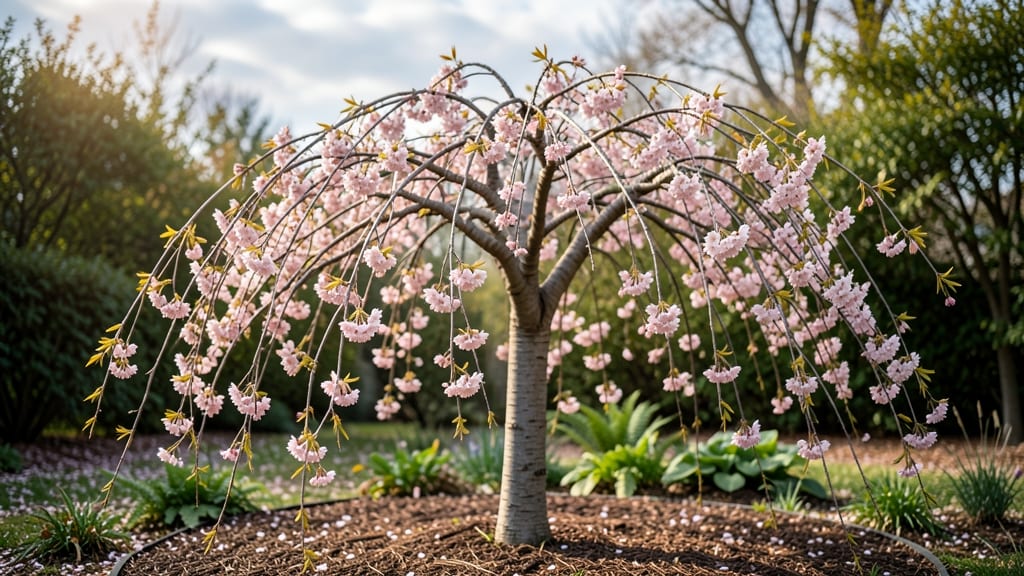
Ohio’s weeping cherry trees—like the stunning 'Okame' or 'Royal Burgundy'—bring cascading spring blooms and year-round interest to any yard. 🌸 I’ve pruned these varieties through Ohio winters, and the key is timing: late winter or early spring when the tree is still dormant but buds are swelling.
This ensures you don’t accidentally cut off next year’s flowers while shaping the tree for strength.
The right tools make all the difference: sharp pruning shears for clean cuts, loppers for thicker branches, and rubbing alcohol to sterilize between cuts. Ohio’s cold snaps can stress trees, so avoid heavy pruning in fall—it leaves wounds vulnerable to winter dieback.
Focus on removing dead wood, crossing branches, and thinning to improve airflow, which cuts down on fungal issues like powdery mildew that plague Ohio’s humid summers.
What you’ll end up with is a tree that bursts into pink or white blossoms each spring, stays compact enough for small yards, and handles Ohio’s -20°F winters like a champ.
The first year after pruning, you’ll notice fewer broken branches in ice storms and a denser canopy that shades your patio better. Even better? These varieties produce edible cherries in late summer—just don’t expect a harvest big enough to can.
For Ohio gardeners, the best time to plant is late fall or early spring, when soil temps are cool but consistent. Amend heavy clay soil with compost to prevent root rot, and mulch with 3 inches of wood chips to protect roots in our brutal winters.
Local nurseries like Wayne’s World Nursery or Star Nursery carry cold-hardy varieties, and their staff can point you to the best options for your microclimate—whether you’re in Toledo’s Zone 6 or Columbus’s Zone 5.
📚 In This Guide
- What you need
- Instructions
- Tips and common mistakes
- Wrapping up and next steps
What you need
- ● Pruning shears: Bypass pruners (for cuts up to ½ inch thick) – 1 pair (look for sharp, stainless steel blades).
- ● Loppers: Bypass or anvil type (for branches ½ to 2 inches thick) – 1 pair (extendable handles are a plus!).
- ● Pruning saw: Curved-tooth saw (for branches 2+ inches thick) – 1 (avoid straight teeth—they tear wood).
- ● Disposable gloves: Heavy-duty, cut-resistant – 1 pair (protects from thorns and sap).
- ● Rag or paper towels: For cleaning tools – 2-3 (keep tools sanitized!).
- ○ Pruning sealant: Optional but helpful (e.g., Tanglefoot Tree Wound Pruning Seal) – 1 small tube (prevents disease entry).
- ● Ladder: Aluminum or fiberglass (if tree exceeds 6 feet) – 1 (prioritize stability!).
- ● Safety gear: Safety glasses and long sleeves – 1 set (sap can irritate skin!).
- ● Timing: Prune in late winter or early spring (before buds swell) for Ohio’s cold-hardy varieties like Prunus serrulata ‘Kanzan’ or Prunus subhirtella ‘Autumnalis’.
- ● Weather: Choose a dry, calm day (avoid wind or rain—sap slows healing).
- ● Tree health check: Inspect for diseased or dead branches (look for brown, brittle wood or fungal growth).
- ● Cleanup supplies: Trash bags or compost bin – 2-3 (dispose of debris promptly).
Instructions for pruning weeping cherry trees in Ohio
Ohio’s cold-hardy weeping cherries thrive with the right pruning—here’s how to shape them for health and beauty.
✂️ Step 1: Time Your Pruning for Ohio’s Climate
Prune your weeping cherry tree during its dormant season, ideally in late winter or early spring before buds swell. In Ohio, this means February through March when temperatures hover around 30-45°F. Pruning at this time prevents disease spread and promotes vigorous spring growth. Avoid pruning in fall—wet conditions invite fungal infections like silver leaf disease.
If you must prune in summer, do it only to remove dead or diseased branches immediately after spotting them. Summer pruning stresses the tree and can lead to weak regrowth. I always mark the branches I need to remove with flagging tape in late fall so I can act quickly in winter without forgetting.
🌿 Step 2: Assess the Tree’s Structure and Health
Start by examining the tree’s overall shape and identifying dead, diseased, or crossing branches. Dead branches are brittle and snap when bent, while diseased ones may have discolored bark or fungal growth. Remove any branches that rub against each other—they create wounds that attract pests and diseases. Weeping cherries naturally grow with graceful, arching branches, so avoid over-pruning to maintain their elegant form.
Look for water sprouts—fast-growing, vertical shoots that appear along the trunk or branches. These compete with the tree’s main structure for nutrients. I always prioritize removing these first, as they weaken the tree’s stability. Use sharp pruning shears to make clean cuts just outside the branch collar, the swollen area where the branch meets the trunk.
✂️ Step 3: Make Clean Cuts with the Right Tools
Use bypass pruners for branches up to ½ inch thick and a pruning saw for thicker branches. Always make cuts at a 45-degree angle, about ¼ inch outside the branch collar. Cutting too close to the trunk can damage the tree’s protective layers, while leaving a stub promotes decay. Sterilize your tools with rubbing alcohol between cuts to prevent spreading disease.
For larger branches, make two cuts: the first a few inches out from the trunk, then a second cut just outside the branch collar. This prevents the branch from tearing the bark as it falls. I like to step back after each cut to check the tree’s balance—removing too much wood at once can shock the tree, especially in Ohio’s unpredictable spring weather.
☀️ Step 4: Thin Out for Better Airflow and Light
Thin the tree’s canopy by removing one-third of the oldest, thickest branches to improve airflow and sunlight penetration. Focus on branches that grow inward or downward, as these block light and encourage fungal growth. Weeping cherries benefit from an open, airy structure, so avoid heavy pruning that turns the tree into a dense mass.
Watch for suckers—shoots that grow from the tree’s roots or trunk. These divert energy from the main structure. Remove them at the base with pruners or a spade, being careful not to damage the roots. After pruning, step back and visualize the tree’s shape. The goal is to enhance its natural weeping form while keeping it strong enough to handle Ohio’s winters.
🌱 Step 5: Clean Up and Monitor Recovery
Rake up and dispose of all pruned branches and debris to prevent pests and diseases from taking hold. Avoid composting pruned wood, as it may harbor fungal spores. Water the tree deeply after pruning to help it recover, especially if the winter was particularly dry. Mulch around the base with 2-3 inches of organic mulch, keeping it 6 inches away from the trunk to prevent rot.
Monitor the tree’s progress over the next few weeks. New growth should appear within 4-6 weeks, signaling the tree is healing well. If you notice yellowing leaves, wilting, or signs of stress, adjust your care—weeping cherries are sensitive to over-pruning. In Ohio’s climate, a well-pruned tree will reward you with stunning blooms in spring and a graceful silhouette year-round.
Tips & tricks for pruning weeping cherry trees in Ohio
Ohio’s unique climate demands a thoughtful approach—here’s how to prune your weeping cherry trees like a seasoned arborist.
Timing is Everything: The February through March window isn’t just about avoiding buds—it’s about catching Ohio’s brief dry spell before spring rains arrive. I’ve seen trees pruned in late March develop fungal issues because the wet conditions linger longer than expected. Mark your calendar now: aim for the first week of February when temperatures consistently stay between 30-45°F. This timing prevents disease spread while giving the tree time to heal before summer stress.
Visual Cues Over Rulers: When assessing branches in Step 2, trust your eyes more than measurements. A dead branch will snap like a dry twig when bent, while healthy branches bend slightly. For water sprouts, look for vertical growth that’s thinner than your pinky finger—these are the first to remove. I use a small flashlight to inspect bark texture in shaded areas where disease often hides. Remember, weeping cherries thrive on their natural elegance, so preserve that graceful weeping form while removing only what’s necessary.
Tool Sterilization Matters: Between each cut in Step 3, wipe your pruners with rubbing alcohol—this isn’t optional, it’s essential. I keep a small spray bottle of 70% isopropyl alcohol in my tool bag. Fungal spores can hitchhike between trees, and weeping cherries are particularly susceptible to silver leaf disease. The 45-degree angle cut isn’t just about aesthetics; it creates a smooth wound that heals faster than jagged cuts. For larger branches, the two-cut method prevents bark tearing, which is especially critical in Ohio’s windy springs.
Post-Pruning Recovery Check: After cleaning up in Step 5, schedule a follow-up visit in 4-6 weeks to check for new growth. Yellowing leaves at this stage often indicate stress from over-pruning or root damage. I’ve found that mulching with 2-3 inches of organic material (like shredded bark) helps retain moisture during Ohio’s dry spells. Keep the mulch 6 inches from the trunk—this prevents rot while allowing airflow to the roots, which is crucial for recovery.
Pro Tips for Weeping Cherry Tree Ohio
- Ohio’s unique climate demands a thoughtful approach—here’s how to prune your weeping cherry trees like a seasoned arborist.
- Timing is Everything: The February through March window isn’t just about avoiding buds—it’s about catching Ohio’s brief dry spell before spring rains arrive.
- Visual Cues Over Rulers: When assessing branches in Step 2, trust your eyes more than measurements.
Frequently asked questions
Got questions about caring for your weeping cherry tree in Ohio? You’re not alone! Here are answers to the most common concerns—from pruning timing to winter prep—so your tree stays healthy and stunning year-round.
When is the best time to prune a weeping cherry tree in Ohio?
The ideal time is late winter or early spring (February–March), just before buds swell but before new growth starts. This minimizes stress and disease risk. Avoid pruning in fall or winter when the tree is dormant, as cold snaps can harm fresh cuts. Pro tip: If you must prune in summer, do it early to avoid encouraging late-season growth that won’t harden off for winter.
How much can I trim a weeping cherry tree each year?
Remove no more than 25% of the tree’s foliage in a single year to avoid shocking it. For young trees (under 5 years), focus on shaping and removing dead/diseased branches. Mature trees may need light structural pruning every 2–3 years. Warning: Over-pruning can weaken the tree’s winter hardiness—Ohio’s Prunus serrulata varieties are tough, but they’re not invincible!
Can I prune a weeping cherry tree in winter?
Pruning in mild winter months (December–January) is possible if temperatures stay above 20°F, but it’s riskier. Cold snaps can cause dieback or invite pests. If you spot dead branches in winter, wait until late winter to prune. For heavy pruning, spring is always safer—especially for Ohio’s cold-hardy varieties like ‘Kwanzan’ or ‘Royal Burgundy.’
What should I do if my weeping cherry tree has brown, crinkled leaves?
Brown, crinkled leaves are often a sign of cherry leaf spot (a fungal disease) or aphid infestation. Act fast:
- Remove and destroy infected leaves.
- Apply copper fungicide or neem oil in early spring.
- Prune for better airflow to reduce humidity.
Are there cold-hardy alternatives to weeping cherry trees for Ohio?
Yes! If you love the look but want even more cold resistance, consider:
- ‘Snow Fountain’ weeping hawthorn (Zone 3–8): Thrives in Ohio’s winters, disease-resistant.
- ‘Pendula’ Japanese maple (Zone 5–8): Stunning foliage, slower growth.
- ‘Hopcorn’ serviceberry (Zone 4–8): Edible berries + weeping habit!
Wrapping up and next steps
The weeping cherry tree in Ohio is a stunning addition to any landscape, and with the right pruning techniques, you can keep it thriving for years to come. Remember, timing, tools, and technique are key—whether you're shaping its graceful branches or preparing it for winter. 🌸
Now that you're equipped with expert tips, roll up your sleeves and give your weeping cherry tree the care it deserves. Start by scheduling your next pruning session—spring or late winter are ideal!
For extra inspiration, snap a photo of your tree’s progress and share it with fellow gardening enthusiasts. Happy pruning!