
Watering
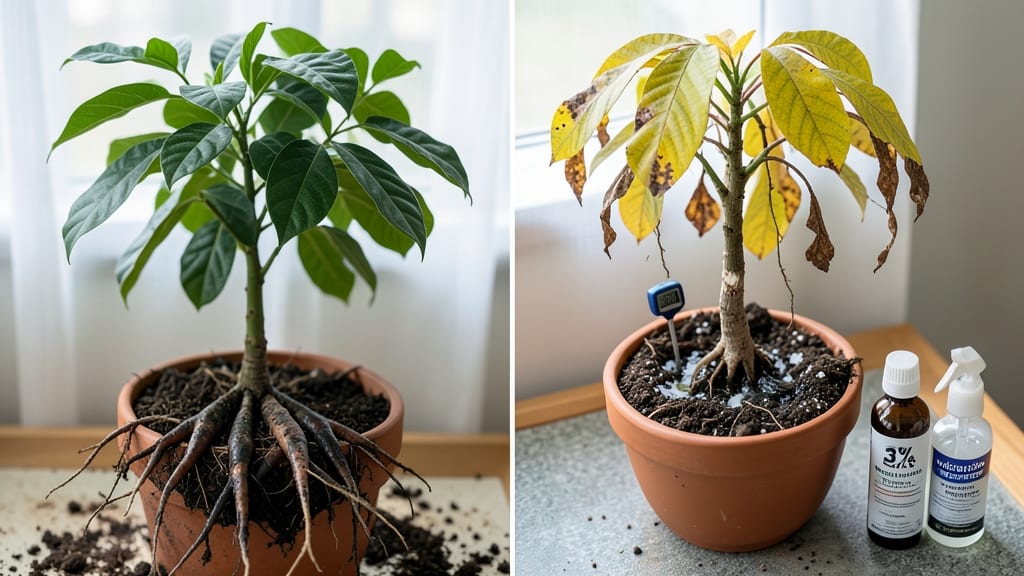
An overwatered avocado tree looks like it's drowning—droopy leaves, yellowing foliage, and a sad, squishy soil smell that says "too much love." 🌿 I've seen this happen more times than I'd like to admit, usually after someone assumes avocados need constant hydration like a tropical rainforest.
The truth? Avocados hate soggy roots, and the signs are unmistakable once you know what to watch for.
The first red flags appear above ground: leaves turn yellow or brown at the edges, then wilt even when the soil feels damp. Check the soil—if it's mushy or smells foul, that's your answer. Roots might look grayish and mushy instead of firm and white, a sure sign of rot.
The plant may also develop mold or fungus on the soil surface or at the base of the trunk.
Fixing it starts with withholding water immediately and improving drainage. Let the top 2-3 inches of soil dry out between waterings, and consider repotting into a container with better drainage holes. If the roots are already rotting, you may need to trim the damaged parts and treat with a fungicide.
With better care, your tree can bounce back—just give it time and patience.
Here's the thing—avocados are drought-tolerant once established. Many gardeners overcompensate after seeing their trees struggle in dry conditions, but too much water does more harm than good. Keep an eye on those leaves and soil, and you'll spot the problem before it's too late.
Root Causes Of Overwatering
Overwatering an avocado tree isn’t just a gardening mistake—it’s a silent killer that disrupts the plant’s delicate balance of water, oxygen, and nutrients. Understanding why it happens helps you avoid repeating the same errors. Here’s a breakdown of the most common culprits, backed by science and actionable insights.
Avocado trees (Persea americana) thrive in well-draining soil because their roots are sensitive to waterlogging. When soil doesn’t drain properly, excess moisture lingers around the roots, suffocating them. Here’s why this happens:
- Clay-heavy soil: Clay particles pack tightly, creating tiny air pockets that fill with water instead of allowing it to drain. This is especially common in heavy-textured soils with high silt or clay content (test your soil’s drainage with the jar test).
- Compacted soil: Foot traffic, machinery, or even natural settling can compress soil, reducing pore space. Roots struggle to access oxygen, and water pools instead of percolating downward.
- Improper pot design: Containers without drainage holes or those lined with plastic (which traps moisture) act like sponges, holding water against the roots. Even "self-watering" pots can backfire if not monitored.
💡 Pro Tip: Amend clay soil with organic matter (compost, coconut coir, or perlite) to improve aeration. For pots, use a terracotta or fabric pot with drainage holes and a saucer underneath to catch excess water—never let the tree sit in standing water.
Avocado trees are drought-tolerant once established, but many gardeners water on a schedule rather than responding to the plant’s needs. Here’s how this leads to overwatering:
- Ignoring soil moisture: Watering every few days—even with "light" doses—keeps the root zone saturated. Avocado roots need oxygen, which dissolves in water but gets depleted when soil stays wet for more than 2–3 days.
- Assuming "more is better": Young trees need frequent watering, but mature trees (5+ years) can go weeks without water in well-draining soil. Confusing thirst with drought tolerance is a common pitfall.
- Rainfall miscalculations: Overcast days or light drizzles might not penetrate deeply, but gardeners often skip watering after "rain," assuming the tree is hydrated. Use a rain gauge or soil moisture meter to track real absorption.
🌡️ Science Check: Avocado roots thrive in soil that’s 60–70% air and 30–40% water. When water exceeds 50%, root cells drown, and beneficial microbes that aid nutrient uptake suffocate.
Not all overwatering is your fault—sometimes, the environment conspires against your tree. These conditions create a perfect storm for root stress:
| Factor | Why It Causes Overwatering | Solution |
|---|---|---|
| High Humidity | Moist air slows evaporation, keeping soil damp longer. In tropical climates (where avocados love to grow), this can extend the "wet period" by days. | Reduce watering frequency by 30–50% in humid months. |
| Shade Without Airflow | Dense foliage or walls trap humidity near the soil. Without sunlight, water evaporates 50% slower, increasing rot risk. | Prune nearby plants to improve airflow or move potted trees to partial sun. |
| Cold or Windy Weather | Cold slows root activity, making the tree less able to absorb water. Wind can dry leaves but not the soil, leading to uneven moisture distribution. | Water shallowly (top 2 inches) in cold snaps to prevent deep saturation. |
✨ Key Insight: Avocado trees in containers are especially vulnerable because pots heat up in sunlight, causing water to evaporate from the soil surface while the roots stay soggy below. Use mulch (straw or wood chips) to regulate temperature and reduce surface evaporation.
By identifying these root causes, you can prevent overwatering before it damages your tree. The next step? Learning to spot the warning signs early—because once root rot sets in, even the best drainage fix won’t save your avocado.
Reviving Your Avocado Tree: Step-by-Step Fixes
Overwatering can feel like a death sentence for your avocado tree, but with the right approach, you can nurse it back to health—even if it’s already showing signs of distress. The key is acting fast, diagnosing the root cause (literally and figuratively), and adjusting your care routine.
Below, we’ll break down practical solutions for each symptom of overwatering, from wilting leaves to mushy roots, plus prevention tips to keep your tree thriving long-term.
If your avocado tree’s leaves are turning yellow (especially older ones) or falling prematurely, overwatering is likely suffocating the roots and blocking nutrient uptake.
How to Fix It:
- 🔥 Stop Watering Immediately
- Let the top 2–3 inches of soil dry out completely before watering again. Stick your finger in the soil—if it’s damp past your first knuckle, wait.
- 🍳 Improve Soil Drainage
- Mix perlite, coarse sand, or pumice into the soil (20–30% of the pot’s volume) to create air pockets. For potted trees, repot into a terracotta container if using plastic.
- 👨🍳 Flush the Soil
- Water the tree heavily until it drains from the bottom, then let it dry for 3–4 days. Repeat weekly for 2–3 weeks to purge excess salts and chemicals.
- 🥗 Feed with the Right Nutrients
- Use a balanced, water-soluble fertilizer (like 10-10-10) diluted to half-strength once the soil is dry. Avocados need zinc and magnesium—add a chelated zinc supplement if growth remains stunted.
Droopy leaves mean your tree is gasping for air. Root rot or compacted soil can cut off oxygen to the roots, causing wilting even when the soil is wet.
How to Fix It:
- ⏰ Check for Root Rot
- Gently remove the tree from its pot and inspect the roots. Healthy roots are firm and white; rotten roots are mushy, black, or smell foul.
- If rot is present, trim away affected roots with sterilized scissors and treat with a fungicide (like copper fungicide or hydrogen peroxide spray).
- 🌡️ Repot in Fresh, Well-Draining Soil
- Use a cactus/succulent mix blended with orchid bark or perlite. Avoid garden soil—it compacts and holds too much moisture.
- Pro tip: Add a 1-inch layer of gravel at the pot’s bottom to prevent future waterlogging.
- 💡 Adjust Watering to a Schedule - Water only when the top 2 inches of soil are bone-dry.
For potted avocados, this is usually every 7–10 days in warm weather, every 2–3 weeks in winter. - Test your pot: If it doesn’t have drainage holes, drill them—this is non-negotiable.
If your avocado’s roots are black, slimy, or crumbling, root rot has set in. Act fast—this is a life-or-death situation.
How to Fix It:
- 🚨 Emergency Root Pruning
- Remove the tree from its pot and rinse the roots with water to remove excess soil.
- Trim all soft, dark roots with clean pruners, leaving only firm, white roots intact.
- 🌿 Repot in Sterile Soil
- Use a new pot (sterilize with bleach if reusing) and fresh, fast-draining soil (cactus mix + perlite).
- Skip watering for 3 days to let any remaining wounds heal.
- 💊 Apply a Fungicide & Adjust Care
- Spray roots with hydrogen peroxide (3%) or a beneficial fungus like Trichoderma.
- Move to bright, indirect light and reduce humidity (root rot thrives in damp air).
- ✨ Monitor & Be Patient
- New growth may take 4–8 weeks. If the tree doesn’t recover, it may be beyond saving—but prevent future rot by never letting it sit in soggy soil.
Once your tree is on the mend, prevent relapse with these habits:
- 💡 Water Like a Pro
- Potted avocados: Water deeply but infrequently—better to underwater slightly than drown.
- Outdoor trees: Water at the base only (avoid wetting leaves) and mulch to retain moisture without suffocating roots.
- 🌡️ Choose the Right Pot
- Terracotta pots wick away moisture better than plastic. Ensure drainage holes are unblocked (use a drill if needed).
- 🥗 Soil Matters
- Avoid garden soil—it’s too dense. Opt for 50% potting mix + 50% perlite/pumice.
- 🌱 Prune for Airflow
- Trim crowded branches to improve air circulation, reducing humidity around the tree.
- 📊 Seasonal Adjustments
- Winter: Water every 3–4 weeks (growth slows).
- Summer: Water every 5–7 days (but check soil first!).
Final Thought: Overwatering is one of the easiest mistakes to fix—but consistency is key. Once your avocado tree bounces back, stick to the dry-before-watering rule, and you’ll enjoy lush, healthy foliage (and maybe even fruit!) for years. 🌿✨
Frequently asked questions
How can I tell if my avocado tree's yellow leaves are from overwatering vs. underwatering?
Check the soil first—if it's damp below 2 inches, you're overwatering. Yellow leaves from overwatering often appear older first and feel soft or mushy. For underwatering, leaves yellow from the edges inward and may feel crispy or dry. Also, overwatered trees wilt even when soil is wet, while underwatered ones wilt only when soil is bone-dry.
My avocado tree has mold growing on the soil surface—what should I do?
That's a classic overwatering sign! Remove the moldy top layer of soil and replace it with fresh, dry potting mix (like cactus/succulent blend). Let the remaining soil dry completely before watering again. For prevention, use a terracotta pot and add perlite or sand to improve drainage. Avoid watering until the top 3 inches feel dry.
Can I save an avocado tree with root rot?
Yes, but act fast! Remove the tree from its pot, trim all black/mushy roots with sterilized scissors, and repot in fresh, fast-draining soil (cactus mix + perlite). Skip watering for 3 days to let wounds heal, then water lightly. Apply hydrogen peroxide (3%) to roots as a fungicide. Recovery takes 4-8 weeks—be patient!
How often should I water my potted avocado tree?
Water when the top 2 inches of soil are completely dry—usually every 7-10 days in summer and every 3-4 weeks in winter. Stick your finger in the soil: if it's damp past your first knuckle, wait. Avocados hate soggy roots! Use a moisture meter for accuracy.
Why does my outdoor avocado tree keep getting overwatered even when I follow the rules?
Outdoor trees often suffer from poor soil drainage or heavy clay soil. Test your soil: dig a hole, fill it with water, and time how long it takes to drain. If it takes more than 6 hours, amend with compost or sand. Also, check for compacted soil around the base—loosen it with a fork to improve airflow. Mulch with wood chips to regulate moisture.