
Trees
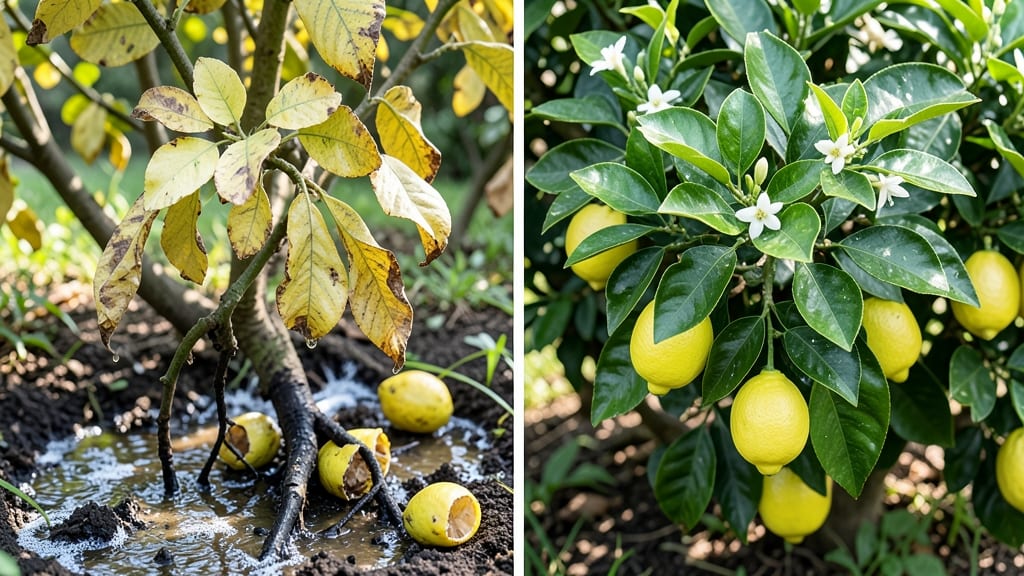
What does an overwatered lemon tree look like? It’s a sad sight: leaves drooping like yellowed handkerchiefs, mushy to the touch, and clinging to branches as if fighting for their last breath. 🌿 That’s the classic sign of overwatering, and it’s worse than you think—roots suffocating in soggy soil, fungal growth creeping up the trunk, and a slow decline that can kill your tree if you don’t act fast.
First, check the soil: it should smell like damp earth, not rot. Stick your finger in—if it’s still wet after 2 inches, you’ve been overdoing it. Then look for other clues: brown, crispy leaf edges (from salt buildup) or black, slimy spots on the trunk (root rot).
The sooner you spot these, the easier it is to fix.
Start by adjusting your watering: let the top 3 inches of soil dry out between drinks, and make sure your pot has drainage holes. If the roots are already mushy, trim the damaged parts and repot in fresh, well-draining mix.
Within a week, you’ll see leaves perk up and new growth push through—proof you’ve saved your tree.
Long-term, keep an eye on your watering schedule and soil moisture. Lemon trees hate soggy feet, so if you’re unsure, it’s better to underwater slightly than drown them. A moisture meter or your finger is your best friend—trust the soil, not the calendar.
Root Causes Of Overwatering
An overwatered lemon tree isn’t just a case of too much love—it’s a complex interplay of environmental, soil, and care-related factors that disrupt the plant’s delicate balance.
Understanding why this happens helps you fix the problem before it’s too late. Let’s break down the science behind soggy soil and stressed roots.
Lemon trees thrive in well-draining soil that mimics their Mediterranean roots. When drainage is poor—whether due to clay-heavy soil, compacted earth, or lack of organic matter—water pools around the roots instead of draining away.
This creates anaerobic conditions (low oxygen), where roots suffocate and can’t absorb nutrients efficiently.
- 🔬 The Science: Roots need oxygen to respire and release energy. Waterlogged soil displaces oxygen, forcing roots to switch to fermentation—a desperate, energy-draining process that weakens the tree.
- 💡 Pro Tip: Test your soil’s drainage by digging a hole, filling it with water, and timing how long it takes to drain. If it’s slower than 4–6 hours, amend with perlite, sand, or compost to improve aeration.
- ⚠️ Warning: Containers without drainage holes are a major risk—water has nowhere to go, leading to root rot in weeks.
Even with good drainage, watering frequency and volume can overwhelm lemon trees. Common mistakes include:
| Mistake | Why It’s Harmful |
|---|---|
| Watering on a schedule (e.g., every 3 days) | Lemon trees need 1–1.5 inches of water per week (more in heat), but soil moisture depends on climate, pot size, and season. Blind schedules ignore these variables. |
| Soaking the soil until it runs out the bottom | While this ensures deep watering, repeating this daily keeps roots saturated, starving them of oxygen. Think of it like drowning a fish—just because it’s “wet” doesn’t mean it’s healthy. |
| Ignoring weather changes (e.g., watering the same amount after rain) | Rainfall + irrigation = double the moisture. Overwatering in wet conditions is a fast track to root rot. |
💡 Pro Tip: Stick your finger 2–3 inches into the soil. If it’s damp, wait. If it’s dry, water deeply until it flows from the drainage hole—then stop.
Container-grown lemon trees are especially vulnerable because roots have limited space to escape excess water. Small pots or plastic containers (which retain moisture longer than terracotta) trap humidity around roots, creating a greenhouse effect that encourages fungal growth.
- 🔬 The Science: Roots in tight spaces compete for oxygen and excrete more ethylene gas (a stress hormone), accelerating cell death in overwatered conditions.
- ✨ Solution:
- Use pots at least 12–18 inches in diameter for mature trees.
- Choose terracotta or fabric pots (breathable materials reduce moisture retention).
- Repot every 2–3 years to refresh soil and give roots room to grow.
Soggy roots are a buffet for pathogens like Phytophthora (root rot) and Pythium. These microbes thrive in waterlogged soil, breaking down root tissue and clogging xylem vessels (the tree’s water transport system).
- 🔬 The Science:
- Fungi release toxins that disrupt root cell membranes, causing leakage of nutrients and cell collapse.
- Bacteria like Erwinia produce enzymes that soften roots, turning them mushy and black.
- 🚨 Signs of Infection:
- Roots that smell rotten or sour.
- Black, slippery roots when touched.
- White, fluffy fungal growth on soil or roots.
- 💡 Prevention: Avoid wetting foliage (use drip irrigation), sterilize tools, and add copper fungicide if infections are suspected.
🌱 Key Takeaway: Overwatering isn’t just about “too much water”—it’s about disrupting the root zone’s oxygen, drainage, and microbial balance. Fixing the issue often means changing soil, pots, or habits—not just cutting back on water.
How to Fix an Overwatered Lemon Tree
Reviving an overwatered lemon tree starts with identifying the root of the problem (literally!) and taking targeted action. Below, we break down the most common causes of overwatering and the practical fixes to nurse your tree back to health—plus tips to keep it thriving long-term.
Fix: Drain, aerate, and adjust your watering routine.
- Stop Watering Immediately 🚰
- Let the top 2–3 inches of soil dry out completely before watering again. Stick your finger in the soil—if it’s damp past 1 inch, wait.
- Improve Drainage 🏗️
- For potted lemon trees: Repot into a container with drainage holes (if missing) and use a well-draining mix like:
- 60% potting soil
- 20% perlite or pumice
- 20% coarse sand or orchid bark
- For in-ground trees: Amend the soil with compost or sand to break up clay and improve aeration.
- For potted lemon trees: Repot into a container with drainage holes (if missing) and use a well-draining mix like:
- Check for Root Rot 🔍
- Gently lift the tree (or dig around the base) to inspect roots. Healthy roots are firm and white; rotten roots are mushy, black, or smell foul.
- If rot is present: Trim affected roots with sterilized pruners (🔪), then dust cuts with cinnamon or fungicide.
- Water Only When Needed ⏰
- Frequency: Water every 7–10 days in summer, every 2–3 weeks in winter (adjust for humidity/climate).
- Method: Water deeply but infrequently—soak the root zone until water drains from the bottom (potted) or 6 inches down (ground).
Fix: Balance moisture and boost nutrition.
- Flush the Soil 💦
- Water the tree thoroughly with pH-balanced water (rainwater or distilled) to leach out excess salts from overwatering.
- Fertilize Smartly 🌿
- Use a balanced citrus fertilizer (e.g., 6-6-6 or 8-3-9) only after soil is dry.
- Schedule: Feed lightly every 4–6 weeks in spring/summer; skip winter.
- Avoid: High-nitrogen fertilizers (they worsen root rot).
- Prune Damaged Foliage ✂️
- Trim yellow or brown leaves to redirect energy to healthy growth. Use clean pruners and sterilize with rubbing alcohol.
- Boost Airflow 🌬️
- Overwatering + poor airflow = fungal risks. Space trees 6–8 feet apart (ground) or elevate pots to improve circulation.
Fix: Act fast to prevent total collapse.
- Assess the Damage 🛠️
- If the trunk is soft or oozing, root rot has spread. Sadly, large trees may not recover, but small potted trees can be saved with:
- Root pruning: Remove all black/mushy roots.
- Repotting: Use fresh, sterile soil and a clean pot.
- If the trunk is soft or oozing, root rot has spread. Sadly, large trees may not recover, but small potted trees can be saved with:
- Apply Fungicide 💊
- Spray copper fungicide or hydrogen peroxide (3%) on roots and soil to combat pathogens.
- Adjust Humidity 🌡️
- Reduce humidity around the tree (e.g., avoid misting, use a dehumidifier in hot climates).
- Monitor Closely 👀
- Watch for new growth. If no improvement in 2 weeks, consider propagating healthy cuttings as a backup.
- Test Your Soil: Use a moisture meter (aim for 40–60% moisture in summer, 20–30% in winter).
- Upgrade Containers: Terracotta pots dry faster than plastic—ideal for lemon trees.
- Mulch Wisely: Use 2–3 inches of wood chips (keep 2 inches away from the trunk) to retain just enough moisture.
- Winter Care: Reduce watering by half in cold months—lemon trees are drought-tolerant then!
- Drip Irrigation: Automate watering with a timer to avoid guesswork.
Pro Tip: 🌟 "If your lemon tree is in a pot, lift it occasionally to check soil weight—if it feels soggy like a sponge, it’s overwatered!"
By addressing the specific symptoms (drainage, nutrition, rot) and adjusting your care routine, your lemon tree can bounce back—often with juicier lemons as a reward! 🍋✨
Frequently asked questions
How can I tell if my lemon tree is overwatered vs. underwatered?
Overwatered trees show yellow, mushy leaves that droop even when soil is wet, while underwatered trees have crispy brown edges and dry soil. Check the soil: overwatered pots feel heavy and soggy, while underwatered ones are bone-dry. Tap the pot—if it sounds hollow, it’s thirsty!
Can I save a lemon tree with root rot from overwatering?
Yes, but act fast! Trim all black/mushy roots with sterilized pruners, repot in fresh, dry soil with perlite, and avoid watering for 5–7 days. Use a fungicide like copper spray to prevent reinfection. If the trunk is soft, the tree may not recover—start fresh with cuttings.
Why do my lemon tree’s leaves turn yellow when overwatered?
Yellow leaves signal root suffocation—water displaces oxygen, starving roots. The tree can’t absorb nutrients, so leaves turn yellow (chlorosis) and may drop. Check for white fungal growth on soil (a red flag for rot). Fix drainage immediately to stop the cycle.
How often should I water a lemon tree to avoid overwatering?
Let the top 2–3 inches of soil dry out between waterings. In summer, this is every 7–10 days; in winter, stretch to 2–3 weeks. Use your finger as a guide—if damp past 1 inch, wait. Containers dry faster than ground soil!
What’s the best soil mix to prevent overwatering in lemon trees?
Use a well-draining blend like 60% potting soil, 20% perlite, and 20% coarse sand. Avoid garden soil—it compacts and holds too much moisture. For potted trees, terracotta pots (which dry faster than plastic) are ideal. Elevate pots to improve airflow around roots.