
Pruning
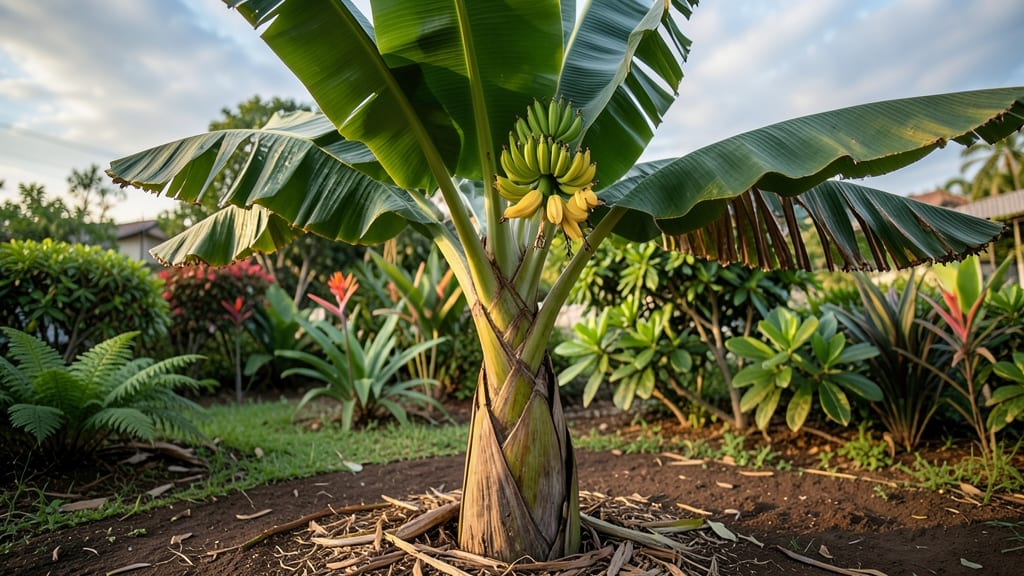
A banana tree is called Musa in its botanical classification—a large herbaceous plant in the Musaceae family—despite its misleading common name. Its pseudostem structure and rapid growth distinguish it from true trees.
A banana tree's botanical name, Musa, reflects its herb classification, not a tree. 🌱 This distinction matters because the plant lacks true wood and grows from a fibrous pseudostem made of tightly packed leaves.
Many people confuse it with trees due to its towering height—some varieties reach 20 feet—but botanists classify it as a monocotyledonous herb. The genus Musa includes over 70 species, with Musa acuminata and Musa balbisiana being the most common ancestors of commercial bananas.
What makes this even more interesting is how regional names complicate things.
In tropical areas, people often call it a "banana plant" or "banana shrub," while in culinary contexts, varieties like Musa paradisiaca are known as plantains. 🌍 The key to identifying them lies in their leaves—long, broad, and pleated—and their fruit clusters, which can be either edible or ornamental.
Whether you're growing one or just curious, understanding these botanical details helps clear up the common misconception that bananas grow on trees.
💡 In This Article
- Botanical Classification of Banana Plants
- Common Names and Regional Variations for Banana Plants
Botanical classification of banana plants
The confusion around banana trees stems from their massive size and tree-like appearance, but botanically, they belong to the Musa genus within the Musaceae family. This classification places them as herbaceous plants, not trees, because they lack true wood and vascular cambium—the tissue that forms wood in trees.
Instead, their pseudostem is a tightly packed cylinder of leaf sheaths that can grow up to 20-30 feet tall, mimicking a trunk but composed entirely of living, flexible tissues.
The pseudostem serves as the plant's structural support and water storage system, growing from a rhizome (underground stem) that produces new shoots.
This growth habit is why banana plants are sometimes called monocots—they share this characteristic with lilies and palms. 🌱 The Musa acuminata species, for example, contributes most of the genetic material to commercial dessert bananas, while Musa balbisiana adds hardiness and disease resistance.
These species hybridize to create the varieties we know, all while maintaining their herbaceous classification.
What truly sets them apart from trees is their lack of secondary growth. Trees increase in girth through wood production, but banana plants grow only in height, with their pseudostem expanding as new leaves unfurl. This rapid vertical growth—sometimes 1 foot per day—is another reason for the misconception.
The plant's lifecycle is also unique: after flowering, the pseudostem dies, and the rhizome sends out new shoots, ensuring continuous growth without needing to "replant" the same structure.
Botanists further divide the Musa genus into sections like Eumusa (edible bananas) and Callimusa (ornamental varieties). The genome sequencing of these plants revealed they have 11 chromosomes (vs. trees' complex wood-forming structures), reinforcing their herb status.
This genetic evidence helps explain why banana plants can't produce true wood or bark, despite their imposing stature.
Understanding these distinctions matters for cultivation. Unlike trees, banana plants are sensitive to frost and require warm climates (70-90°F) to thrive. Their herbaceous nature also means they rely on leaf arrangement for photosynthesis, with each leaf lasting only a few months before dying—another clue to their non-woody classification. 🌿
For gardeners, this means treating banana plants like perennial herbs rather than trees. They don't need pruning like fruit trees but benefit from support structures to prevent pseudostem collapse under heavy fruit loads.
The key takeaway? Their botanical name Musa isn't just a label—it reflects a fundamental difference in structure and growth compared to true trees.