
Pests and Diseases
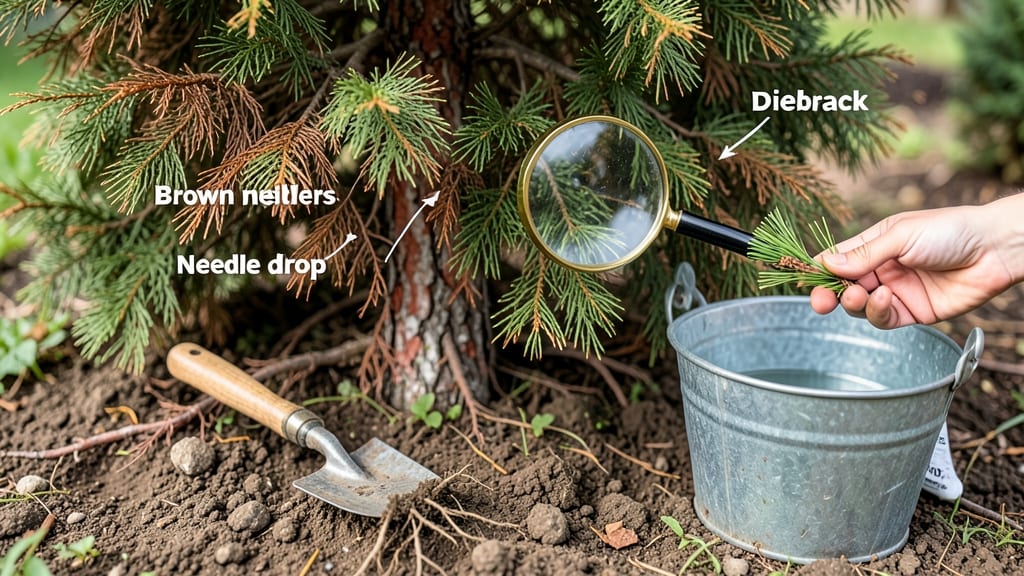
Your cedar tree turning brown isn’t always a death sentence—it’s often a cry for help. 🌲 The first step is figuring out if it’s thirsty, diseased, or stressed, because the fix depends entirely on the cause.
I’ve seen cedars bounce back from drought and even fungal issues with the right approach, and you can too.
Drought is the most common culprit, especially in sandy soil or hot climates. Look for crispy needles that fall easily—they’re begging for water. Fungal diseases like cedar blight show up as orange-brown patches, while pests like bagworms create webbing and skeletonized branches.
The key is checking the needles, bark, and soil moisture.
Once you pinpoint the problem, the solution is straightforward: water deeply but infrequently for drought, prune infected branches for disease, or spray horticultural oil for pests. Most cedars recover quickly if you act before the damage spreads. I’ve nursed back trees that looked hopeless in just a few months.
Prevention is easier than fixing: mulch to retain moisture, water during dry spells, and inspect trees yearly for early signs. Cedar trees are tough—they just need a little help when they start signaling trouble. Let’s get your tree back to its vibrant green self.
Root Causes Behind Browning
When your cedar tree’s foliage shifts from vibrant green to an unappealing brown, it’s often a distress signal from the tree itself. Understanding the why behind this change is the first step toward reviving its health.
Below, we break down the most common culprits—each with a clear scientific explanation and actionable insights to help you diagnose the issue.
---
Cedar trees are drought-tolerant, but that doesn’t mean they thrive in neglect—or overindulgence. Water stress is one of the fastest ways to turn lush green needles brown.
- Drought Stress 🌞💧: Cedar trees absorb moisture through their shallow root systems. When soil dries out, the tree struggles to transport water upward, causing needle desiccation (drying out).
This often starts at the tips and works inward, creating a brown, crispy fringe along the branches. - Why it happens: Under drought conditions, the tree prioritizes water delivery to core branches, sacrificing outer foliage.
Prolonged stress can lead to permanent needle loss as the tree sheds damaged tissue. - Actionable fix: Deep watering 1-2 times per week (depending on climate) during dry spells. Use a soaker hose to deliver moisture directly to the root zone without wasting water through evaporation.
- Overwatering or Poor Drainage 🌧️🚫: While cedars dislike soggy roots, compacted or waterlogged soil can suffocate roots, cutting off oxygen and nutrients.
This leads to root rot and nutrient starvation, which manifest as uniform browning across the tree. - Why it happens: Cedar roots need well-draining soil (sandy loam is ideal).
If water pools around the base or the soil stays damp for days, anaerobic bacteria thrive, breaking down healthy roots. - Actionable fix: Improve drainage by amending soil with perlite or coarse sand, or plant cedars on a slight mound to encourage runoff.
Avoid watering if the top 2 inches of soil are already moist.
---
Fungi thrive in cedar trees, especially when conditions are damp and warm. Brown needle blight and cedar apple rust are two of the most common fungal diseases that turn foliage brown prematurely.
- Brown Needle Blight (Seiridium cardinale) 🍄💀: This aggressive fungus attacks juniper and cedar trees, causing needles to darken, then turn brown and drop.
It thrives in hot, humid summers and spreads via wind or splashing water. - Why it happens: The fungus enters through wounded needles or bark, then colonizes the tree’s vascular system.
Infected needles develop black streaks before browning completely. - Actionable fix: - Prune and dispose of infected branches (do not compost). - Apply fungicidal sprays (copper-based or propiconazole) in early spring before new growth emerges. - Space trees at least 6 feet apart to improve airflow and reduce humidity around foliage.
- Cedar Apple Rust (Gymnosporangium juniperi-virginianae) 🍎🔥: This two-host fungus requires both cedar trees and apple or crabapple trees to complete its life cycle.
On cedars, it causes orange pustules on needles, which eventually turn brown and brittle. - Why it happens: Spores from apple trees infect cedar needles in spring, producing rust-colored pustules.
By summer, the needles darken and fall prematurely. - Actionable fix: - Remove infected apple/crabapple trees from near your cedar (or treat them with fungicides). - Prune cedar branches with visible pustules and sterilize tools with rubbing alcohol between cuts. - Apply copper fungicide to cedars in early spring to prevent spore germination.
---
Cedar trees are a buffet for insects, and their feeding habits can leave behind brown, skeletonized needles or sticky residue (honeydew) that attracts sooty mold.
- Bagworms (Thyridopteryx ephemeraeformis) 🐛🎪: These caterpillars spin silk bags around themselves, munching on needles from the inside out. Infested branches turn brown and sparse as the tree loses foliage. - Why it happens: Bagworms prefer young, tender needles and can defoliate a tree in weeks.
Their silk bags also block sunlight, accelerating needle death. - Actionable fix: - Handpick bags and drown them in soapy water (especially effective before they pupate in late summer). - Spray with Bt (Bacillus thuringiensis)—a natural bacteria that kills caterpillars—in early summer when larvae are small. - For severe infestations, use permethrin-based insecticides (follow label instructions).
- Spider Mites (Tetranychus spp.) 🕷️🌡️: These microscopic pests suck sap from needles, causing stippling (tiny white/yellow dots) that turn brown as the needle tissue dies.
Hot, dry weather supercharges their populations. - Why it happens: Spider mites thrive in drought stress because stressed trees produce less sap, making them easier targets.
Their webbing can also smother new growth. - Actionable fix: - Blast off mites with a strong water spray (early morning or evening to avoid shocking the tree). - Use neem oil or horticultural oil as a preventive spray in spring and summer. - Introduce predatory mites or ladybugs to control populations naturally.
---
Cedars are low-maintenance, but they still need basic nutrients to stay green. A deficiency in nitrogen, iron, or manganese can cause chlorosis (yellowing) that progresses to brown as the tree weakens.
- Nitrogen Deficiency (The "Lazy Green" Problem) 🌱💚: Nitrogen is essential for chlorophyll production.
Without enough, needles turn yellow between veins, then brown and drop. - Why it happens: Poor soil, recent construction (disturbed roots), or over-fertilizing with phosphorus-heavy feeds can lock out nitrogen. - Actionable fix: - Conduct a soil test to confirm nitrogen levels (ideal range: 5-10 ppm). - Apply slow-release nitrogen fertilizer (like milorganite) in early spring. - Mulch with compost or pine needles to improve soil organic matter naturally.
- Micronutrient Deficiencies (Iron & Manganese) 🧪🔬: Iron and manganese are critical for chlorophyll synthesis.
In alkaline soils (pH > 7.0), these nutrients become unavailable, causing brown needles with green veins (a classic sign of lime-induced chlorosis). - Why it happens: Cedar trees prefer slightly acidic to neutral soil (pH 6.0-7.0).
High pH binds iron and manganese, preventing uptake. - Actionable fix: - Lower soil pH with elemental sulfur or peat moss (follow package rates). - Apply chelated iron or manganese sulfate as a foliar spray for quick results. - Plant cedars in acidic, well-draining soil if possible (e.g., amended with pine fines or compost).
--- Sometimes, browning isn’t about disease or pests—it’s about mechanical injury. Cedar trees are tough, but they’re not immune to sun scorch, frost damage, or human error.
- Sun Scorch ☀️🔥: Young cedars or those planted in full sun without acclimation can develop brown patches on south/west-facing branches when afternoon sun dries needles too quickly. - Why it happens: Needles lose moisture faster than roots can replace it, leading to oxidative stress and cell death. - Actionable fix: - Provide afternoon shade (use shade cloth or plant near taller trees). - Deep water before peak sun hours (early morning is best). - Avoid pruning
How to Revive Your Cedar Tree
A brown cedar tree can be a heartbreaking sight, but don’t lose hope—many causes have simple fixes. Below, we’ve mapped out practical solutions for each common culprit, along with prevention tips to keep your tree lush and green.
Let’s roll up our sleeves and get your cedar back in fighting shape!
---
Signs: Crispy, dry needles that crumble easily; soil pulling away from the trunk.
#### 💧 Step-by-Step Revival Plan 1. 🔥 Deep Watering Session - Water slowly and deeply (1–2 inches per week) to encourage roots to grow downward. Use a soaker hose or drip irrigation to avoid runoff. - Pro Tip: 🌡️ Morning watering (before 10 AM) reduces evaporation and fungal risks.
2. 👨🍳 Mulch Like a Pro - Spread 3–4 inches of organic mulch (wood chips, pine straw) around the base, keeping it 6 inches away from the trunk. - Mulch retains moisture and regulates soil temperature—cedars hate heat stress!
3. 🌱 Adjust Your Watering Routine - Newly planted cedars? Water 2–3 times per week for the first year. - Established trees? Switch to weekly deep watering during dry spells.
#### 💡 Prevention Tips - Install a rain gauge to track moisture levels. - Group cedars with other drought-tolerant plants to create a microclimate. - Avoid over-trimming roots during landscaping—healthy roots = better drought resistance.
---
Signs: Brown, mushy needles; white fungal growth on bark/stems; wilting despite water.
#### 🔪 Disease-Specific Solutions | Disease | Fix It Fast | Prevent Future Outbreaks | |-------------------|----------------------------------------|---------------------------------------| | Cedar Blight | 🍄 Prune infected branches 6+ inches below the lesion. Sterilize tools with 70% alcohol. | ✨ Space trees 6+ feet apart for airflow.
Avoid overhead watering. | | Root Rot | 🌧️ Improve drainage by amending soil with sand or compost. Reduce watering. | 💡 Test soil pH (ideal: 6.0–7.0).
Avoid compacted or clay-heavy soil. | | Needle Blight | 🧴 Fungicide spray (copper-based or propiconazole) every 2–3 weeks until new growth appears. | 🌿 Remove fallen needles to reduce spores. |
#### 🌿 Extra Defense Moves - Aerate compacted soil with a garden fork to help roots breathe. - Boost tree immunity with a balanced fertilizer (10-10-10) in early spring.
---
Signs: Needles covered in webbing; tiny holes in foliage; white cocoon-like sacs.
#### 🕷️ Pest Control Playbook 1. 🔍 Early Detection - Shake branches over a white sheet—pests will drop! Check for: - Bagworms: Brown, tent-like bags. - Spider mites: Fine webbing on needles. - Sawflies: Skeletonized (chewed) needles.
2. 🧴 Organic & Chemical Options - 🍃 Natural: Neem oil (spray at dusk) or BT (Bacillus thuringiensis) for caterpillars. - 💊 Chemical: Permethrin or bifenthrin (follow label rates). Reapply after rain.
3. 🧹 Manual Removal - Bagworms: Handpick and drown in soapy water. - Spider mites: Blast off with a strong hose stream.
#### 🎯 Prevention Tactics - 🕰️ Time it right: Treat in early spring (before eggs hatch). - 🌿 Attract predators: Plant marigolds or dill nearby to lure ladybugs and lacewings. - 🧹 Clean up: Remove last year’s bags/sacs in fall to break the life cycle.
---
Signs: Needles turning brown only on one side (southwest exposure); tips drying out.
#### 🌿 Quick Adjustments - 🌳 Provide shade with a lightweight shade cloth (30–50%) during peak sun (11 AM–3 PM). - 💨 Windbreaks: Plant a hedge or fence on the windward side to reduce desiccation. - 🚰 Hydration boost: Water deeply on hot days to prevent midday stress.
#### 💡 Long-Term Care - 🌱 Choose the right spot: Cedars prefer partial shade in hot climates. - 🌡️ Monitor temps: If your area hits 90°F+, consider mulch blankets for young trees.
--- If your cedar shows: - Large sections of dead wood (not just browning). - Oozing sap or cankers (signs of advanced disease). - No improvement after 3 months of care.
A professional can diagnose internal rot, advanced blight, or pest infestations that need targeted treatment.
--- 🎉 You’ve Got This! With the right approach, your cedar can bounce back—greener and stronger than ever. Start with the most likely cause, act fast, and soon you’ll be admiring a thriving tree instead of a brown skeleton. 🌲✨
Frequently asked questions
Why are only the needle tips turning brown on my cedar?
This is usually a classic sign of drought stress or sun scorch. Cedar trees often show early browning at needle tips when they're not getting enough water or when exposed to intense afternoon sun. Check if the soil is dry 2 inches down—if it is, water deeply once a week during dry spells. For sun scorch, provide afternoon shade or water before 10 AM.
Could my cedar tree be dying if half the needles are brown?
Not necessarily! Many cedars naturally shed 20-30% of their needles annually, especially in late winter or early spring. If the browning is uneven (like patches) and the tree still has green growth, it's likely recoverable. However, if entire branches are dead with no new growth, consult an arborist to rule out advanced disease or root issues.
What's the difference between brown needles from drought vs. fungal disease?
Drought causes crispy, dry needles that crumble easily and often starts at the tips. Fungal diseases like cedar blight create dark streaks or orange pustules before browning, and the needles may stay leathery rather than brittle. Check for white fungal growth on bark or stems—if present, prune infected areas and apply copper fungicide.
Will my cedar tree grow back if I fix the problem now?
Yes! Cedar trees are resilient and will often regrow new needles from healthy buds if you address the issue quickly. Focus on the root cause: water properly for drought, treat fungal issues with fungicide, or remove pests. New growth typically appears within 4-6 weeks of proper care, though severe cases may take up to a year to fully recover.
How do I know if my cedar has spider mites vs. just dry needles?
Spider mites leave tiny white/yellow stippling on needles (like pepper sprinkles) and create fine webbing between branches. Hold a white sheet under the tree and shake branches—if you see tiny red/orange bugs (mites), blast them off with water or apply neem oil. Dry needles from drought won't have these visual clues.