
Pruning
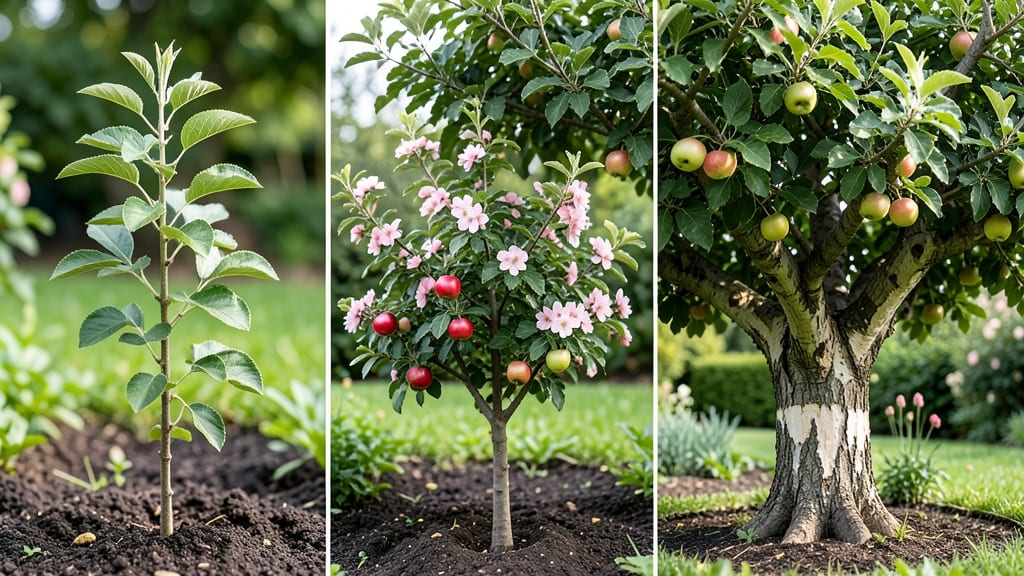
Tracking an apple tree growth chart turns guesswork into a roadmap to harvests. 🌳 I’ve watched my own trees go from a sapling to a fruit-bearing giant—and knowing the exact height projections for each variety makes all the difference in planning space, pruning, and care.
The first five years are all about establishing strong structure: a well-chosen dwarf variety might reach 6 feet by year 3, while standard trees can hit 15 feet by year 5.
Each stage—from seedling to flowering—has specific care needs, like pruning to shape the tree or fertilizing to boost root growth before winter.
By year 7, you’ll see the first real harvests, and the tree’s height stabilizes as it focuses on fruit production. A properly pruned tree not only grows taller but produces healthier branches and bigger apples, making those growth charts your secret weapon for success.
Whether you’re planting a backyard orchard or just one tree, this chart helps you anticipate every phase—from the first spring blossoms to the first autumn harvest. Let’s break down what to expect each year.
📚 In This Guide
- What you need
- Instructions
- Tips and common mistakes
- Wrapping up and next steps
What you need
- ● Apple Tree Sapling or Bare-Root Plant: 1 standard-sized sapling (3–5 ft tall) or bare-root tree (dormant season purchase).
- ● Choose a variety suited to your USDA hardiness zone (e.g., Honeycrisp, Granny Smith, or Fuji).
- ● Soil & Fertilizer: 5–10 lbs of well-draining potting mix (for containers) or native soil amended with compost (for in-ground planting).
- ● 1 lb of balanced fertilizer (10-10-10 or organic options like fish emulsion).
- ○ Optional: Mycorrhizal fungi (1 packet) to boost root health.
- ● Planting Supplies: 1 garden trowel or spade (for digging).
- ● 1 5-gallon bucket (for watering or mixing soil).
- ● 1 roll of mulch (straw or wood chips, 2–3 inches thick).
- ● Pruning Tools: 1 pair of bypass pruners (for small branches).
- ● 1 pruning saw (for thicker branches).
- ● 1 disinfectant spray (70% isopropyl alcohol) to clean tools between cuts.
- ● Growth Tracking: 1 measuring tape (10–25 ft, for height tracking).
- ● 1 notebook or growth chart template (printable or digital).
- ○ Optional: tree growth rings or markers (for visual tracking).
- ● Pest Control: Neem oil spray (for aphids or mites).
- ● Sticky traps (to monitor fruit flies).
- ● Support Structures: 1–2 tree stakes or bamboo poles (for young trees).
- ● 1 tree tie kit (to secure stakes without damaging bark).
- ● Irrigation: Drip irrigation system or soaker hose (for consistent moisture).
How to track your apple tree’s growth year by year
Here’s the straightforward way to predict—and encourage—your tree’s height and maturity.
📏 Step 1: Identify Your Variety’s Growth Rate
Apple trees vary wildly: dwarf varieties like ‘Liberty’ reach 10-15 feet in 5-7 years, while standard ‘Granny Smith’ can hit 25-30 feet in the same time. Check your tree’s tag or consult a local nursery—this determines everything from pruning strategy to harvest timelines. I always verify with the grower because mislabeling happens more than you’d think.
Dwarf and semi-dwarf trees grow 12-24 inches per year once established, while standard varieties shoot 24-36 inches annually. Write down your tree’s variety and expected mature height now—you’ll reference this often. For example, a ‘Honeycrisp’ semi-dwarf might hit 12 feet by year 5, while a ‘Fuji’ standard could top 20 feet by then.
📅 Step 2: Plot Annual Height Increments
Measure your tree’s height at the same time each year (spring, before new growth). Use a 10-foot tape measure or a measuring stick—I lean mine against the trunk and extend it upward to the highest branch tip. Record the measurement in a simple chart with columns for year, total height, and growth since last year.
Young trees (years 1-3) grow slowly—expect 6-12 inches per year as roots establish. After year 3, growth accelerates. For instance, a ‘Gala’ dwarf might grow 18 inches in year 4, then 24 inches in year 5. Plot these numbers to spot deviations—sudden slowdowns often signal nutrient deficiencies or poor soil.
🌿 Step 3: Adjust Care Based on Growth Patterns
If your tree’s growth lags more than 50% below projections, check soil pH (ideal: 6.0-6.5) and add compost or organic fertilizer in early spring. I’ve seen trees rebound dramatically after a balanced 10-10-10 application in year 2. Conversely, if growth is too aggressive (e.g., 36+ inches in one year), prune back 20-30% of new shoots to redirect energy to fruit production.
Watch for sensory cues: Leaves turning yellow or wilting? That’s often overwatering—apple trees hate soggy roots. Conversely, brown leaf edges usually mean underwatering or dry soil. Mulch with 3-4 inches of wood chips to retain moisture and regulate temperature. This simple step can add 6-12 inches of growth in a single season.
🍎 Step 4: Predict First Fruit and Full Maturity
Dwarf varieties typically bear fruit in 3-5 years, semi-dwarfs in 5-7 years, and standards in 7-10 years. Use your height chart to estimate: a 10-foot ‘Red Delicious’ semi-dwarf is likely ready for its first harvest. I mark year 3 on my chart with a highlighter—it’s the psychological tipping point where most trees finally produce.
Full maturity (peak fruit production) usually occurs when the tree reaches 60-70% of its expected height. For example, a ‘Pink Lady’ standard (mature height: 25 feet) will hit its prime at 15-17 feet. At this stage, focus on thinning fruit to prevent overburdening branches—too many apples can stunt growth. I remove 50% of blossoms in early spring to ensure larger, higher-quality fruit.
⏰ Step 5: Plan Long-Term Pruning for Height Control
Prune in late winter or early spring (before buds swell) to shape the tree and manage height. For dwarf varieties, aim to limit vertical growth to 12-18 inches per year by cutting back 1/3 of the tallest branches. Use clean, sharp pruners to avoid tearing bark—this prevents disease. I always prune just above an outward-facing bud to encourage bushier growth.
Standard trees need structural pruning to maintain an open center. Remove suckers (shoots at the base) immediately—they drain energy from fruit production. If your tree grows more than 36 inches in a year, prune 20-30% of the canopy to slow height gain. This isn’t about stunting the tree; it’s about balancing growth and fruit yield for decades of harvests.
Tips & tricks for tracking apple tree growth like a pro
These insider strategies will help you turn your growth chart into a precise tool for predicting—and optimizing—your apple tree's development.
Variety Verification: Double-check your tree's variety with the nursery or grower before you begin. I once had a tree labeled 'Honeycrisp' that turned out to be a semi-dwarf 'Fuji'—this mistake would have thrown off my entire 5-year projection by 3 feet. Always cross-reference with a trusted orchard guidebook or website. The small effort now saves major confusion later when your growth projections don't match reality.
Measurement Consistency: Use the same measurement technique every spring to avoid discrepancies. I recommend the "trunk-to-tip" method: place the bottom of your tape measure at the base of the trunk (where it meets the soil) and extend it to the highest branch tip. For trees over 10 feet, have a helper hold the top of the tape while you read the measurement at the base. Record measurements to the nearest inch for accuracy—small variations become meaningful over multiple years.
Growth Pattern Analysis: Pay attention to seasonal growth spurts beyond the annual measurements. Apple trees often have two main growth periods: spring flush (rapid early growth) and late summer growth. If you notice your tree growing 6-12 inches in just 6 weeks during spring, it's likely compensating for slower growth earlier in the season. This pattern helps explain why some years show bigger jumps than others—it's not necessarily a problem, just natural growth rhythm.
Digital Backup Strategy: Create a digital backup of your growth chart using a simple spreadsheet or tree growth tracking app. I use Google Sheets with color-coded cells for each variety type (dwarf, semi-dwarf, standard). Include tabs for annual measurements, pruning notes, and fruit production records. This digital version lets you easily compare growth rates across different varieties and spot trends over multiple years. The visual representation makes it easier to see when growth deviates from expectations.
Pro Tips for Apple Tree Growth Chart
- These insider strategies will help you turn your growth chart into a precise tool for predicting—and optimizing—your apple tree's development.
- Variety Verification: Double-check your tree's variety with the nursery or grower before you begin.
- Measurement Consistency: Use the same measurement technique every spring to avoid discrepancies.
Frequently asked questions
Got questions about tracking your apple tree’s growth? You’re not alone! Here are answers to the most common queries—from curious gardeners to seasoned orchard keepers.
How tall will my apple tree grow in 5 years?
It depends on the variety! Dwarf trees (like ‘Gala’ or ‘Fuji’) typically reach 6–10 feet, while standard varieties (e.g., ‘Granny Smith’) can hit 20–30 feet or taller. Semi-dwarf trees (12–16 feet) are a great middle ground. Always check the specific growth chart for your variety!
When should I prune my apple tree for optimal growth?
Prune late winter or early spring (before buds swell) to shape the tree and encourage strong growth. Avoid heavy pruning in fall—it can invite disease. For young trees, focus on removing dead or crossing branches first. Use sharp tools and sterilize them between cuts!
Can I use a growth chart if I planted a grafted apple tree?
Yes! Grafted trees (like ‘Honeycrisp’ on a dwarf rootstock) follow the rootstock’s growth rate, not the scion (fruit variety). Always reference the rootstock’s chart for accurate height projections. For example, a ‘M.9’ rootstock will stay compact, while ‘MM.111’ grows taller.
My apple tree isn’t growing as fast as the chart predicts—what’s wrong?
Several factors could slow growth: poor soil (test pH—ideal: 6.0–7.0), lack of sunlight (6+ hours daily), or pests/disease (check for borers or fungal spots). Overwatering or underwatering can also stunt growth. Amend soil with compost and ensure proper drainage!
Are there fast-growing apple tree varieties?
Varieties like ‘Anna’ or ‘GoldRush’ (columnar trees) grow 3–4 feet per year and bear fruit earlier. Dwarf trees (e.g., ‘Spartan’ on ‘M.9’) also mature faster. Just remember—faster growth often means shorter lifespan, so balance speed with long-term care.
Wrapping up and next steps
Tracking your apple tree’s growth with a growth chart isn’t just informative—it’s empowering! 🌱 Whether you’re nurturing a dwarf ‘Golden Delicious’ or a towering ‘Granny Smith,’ understanding height projections helps you plan pruning, spacing, and care with confidence.
Now that you’re armed with the right tools and knowledge, take the next step: mark your tree’s progress with a simple stake and tape measure, and adjust your pruning schedule based on its unique pace.
Your apple tree’s future is ripe with potential—literally. Happy growing! 🍏✨