
Diseases
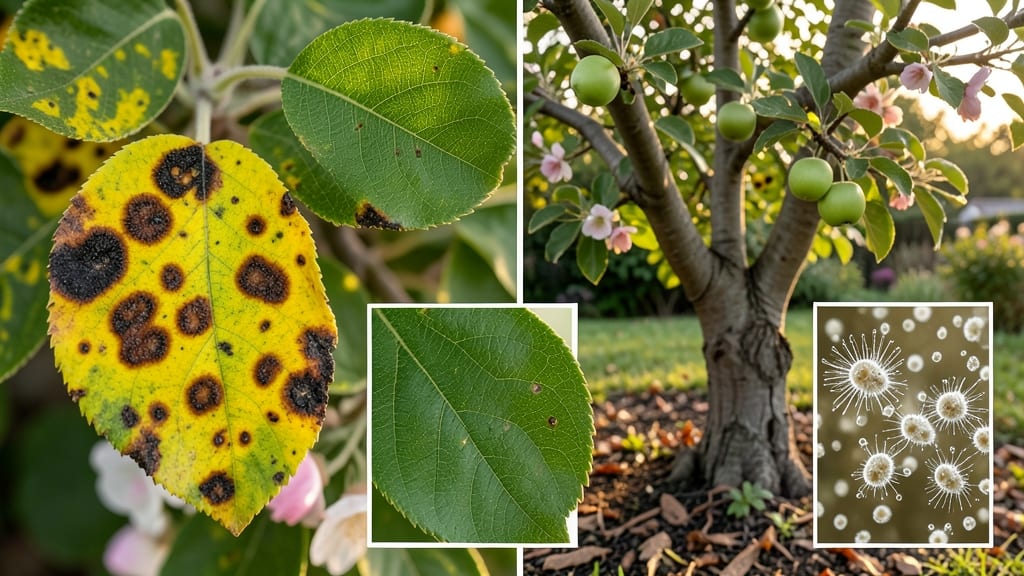
Yellow spots on apple tree 🍏 leaves are a clear warning sign that your tree is under attack—whether from fungal diseases, nutrient deficiencies, or environmental stress.
Waking up to find your once-vibrant apple tree leaves covered in yellow spots can feel like a gardener’s worst nightmare—especially when you’re just months away from harvest.
These unsightly patches don’t just ruin the tree’s appearance; they signal serious diseases like apple scab or cedar apple rust that could weaken your tree or even kill it if left unchecked.
Don’t panic—identifying the root cause is the first step to recovery. Below, I’ll walk you through the most common diseases causing these spots, how to treat them organically or with pesticides, and preventative steps to keep your tree thriving for years to come.
3 Common apple tree diseases causing yellow leaf spots (and how to identify them)
Yellow spots on apple tree leaves aren’t just cosmetic—they’re often a red flag for fungal diseases that can devastate your harvest if ignored. The three most aggressive culprits are apple scab, cedar apple rust, and powdery mildew, each leaving distinct visual clues.
Without proper disease identification, you might waste time treating the wrong issue or let the problem spiral out of control. Let’s break down how to spot these diseases early and what they reveal about your tree’s health.
First, rule out nutrient deficiencies like iron chlorosis or nitrogen shortage, which can mimic yellowing. Unlike diseases, these issues show uniform yellowing (not spots) and often start on younger leaves. If you see irregular brown/yellow patches with dark borders or powdery white coatings, you’re dealing with a fungal infection.
The key is acting fast—some of these diseases spread within weeks once they take hold.
Apple scab is the most common and destructive, causing olive-green spots that turn yellow-brown with a velvety texture. These spots appear on upper leaf surfaces first, often with yellow halos around them. In wet springs (like USDA Zone 6a), this disease can defoliate your tree entirely by summer. The bad news? It overwinters in fallen leaves, making next year’s infection inevitable without cleanup.
🌿 Disease Comparison Table: Yellow Spots on Apple Tree Leaves
| Disease | Spot Color & Texture | Leaf Surface | Seasonal Pattern | Key Identifier |
|---|---|---|---|---|
| Apple Scab | Olive-green → yellow-brown, velvety | Upper surface (sometimes lower) | Peak: Spring (April-May) | Yellow halos, defoliation risk by summer |
| Cedar Apple Rust | Orange pustules → yellow spots with white edges | Lower surface (orange spots), upper (yellow) | Peak: Late spring (May-June) | Requires cedar trees nearby; spots grow larger over weeks |
| Powdery Mildew | White powdery coating → yellow/brown patches | Both surfaces, white film visible | Peak: Summer (July-August) | Leaves curl upward; thrives in high humidity |
💡 Pro Tip: Use a 10x magnifying glass to check for pustules (cedar rust) or powdery texture (mildew).
Cedar apple rust is easier to diagnose if you have cedar trees within a mile—this disease requires both hosts to complete its lifecycle. Look for orange pustules on the undersides of leaves in spring, which later turn into yellow spots with white edges on the upper surface. These spots often appear clustered near branch tips and grow larger over 3-4 weeks. Unlike scab, rust spots are usually irregularly shaped and may drop prematurely.
Powdery mildew stands out because it’s the only one with a visible white coating—almost like someone dusted your leaves with flour. The yellow spots develop underneath this layer, and infected leaves often curl upward to expose more surface area. This disease loves hot, humid summers (like Zone 6a in July) and spreads rapidly if left untreated. The good news? It rarely kills the tree, but it can reduce fruit quality and next year’s growth.
To avoid misdiagnosis, check these three critical zones on your leaves: the leaf edges, midrib, and undersides. Apple scab loves the edges, cedar rust hides on undersides, and powdery mildew coats everything.
Also, note the timing: scab strikes early (April), rust peaks in May-June, and mildew hits hard in July-August. Matching these patterns helps you target treatments before the disease spreads.
If you’re still unsure, grab a leaf sample and take it to your local cooperative extension office—they can confirm the diagnosis for free.
Remember, prevention is easier than cure: removing fallen leaves in fall, spacing trees properly (6-8 feet apart), and choosing resistant varieties (like ‘Liberty’ or ‘Enterprise’) can slash your risk by 70%. Don’t wait until harvest time to act—these diseases start small but grow fast.
🌱
Step-by-step treatment plan to remove yellow spots and restore leaf health
Once you’ve identified the cause of those yellow spots on apple tree leaves, it’s time to act fast. The key to saving your tree lies in a combination of organic treatments, proper pruning techniques, and soil care.
Early intervention—especially before late spring to early summer—can make all the difference in preventing disease spread and ensuring a healthy harvest.
Start by removing the most severely infected leaves to stop the disease from spreading to healthy foliage. This isn’t just about aesthetics; it’s a critical step to break the fungal cycle that thrives on decaying plant matter.
Pair this with targeted treatments to rebuild your tree’s resilience and restore those vibrant green leaves.
Your 5-Step Rescue Plan
- 1 Prune Infected Leaves – Use sterilized pruners to remove yellow or spotted leaves and any nearby branches showing signs of disease. Dispose of them in a sealed bag, not your compost pile.
- 2 Apply Neem Oil Spray – Mix 1 tsp neem oil with 1 quart water and a drop of dish soap. Spray undersides of leaves (where spores hide) every 7–10 days for 3 weeks. Best applied in the early morning or late evening.
- 3 Use Copper Fungicide – For severe infections, spray a copper-based fungicide (like Bordeaux mixture) every 10–14 days. Avoid spraying when bees are active to protect pollinators. Apply in dry, calm conditions for best absorption.
- 4 Amend the Soil – Test your soil’s pH (ideal: 6.0–6.5) and add compost or aged manure to improve drainage and nutrient uptake. Avoid nitrogen-heavy fertilizers, which can weaken the tree’s defenses.
- 5 Protect for Next Season – In fall, rake up and dispose of fallen leaves to eliminate overwintering spores. Apply a 2–3 inch layer of mulch around the base (keep it 6 inches from the trunk) to prevent soil-borne diseases.
Timing is everything when treating apple tree leaf spots. If you catch the issue early—before mid-June—your tree has a better chance of recovering in time for harvest. Late-season treatments (after July) may not yield results before fruit ripens, so focus on preventative care for next year’s growth.
Monitor your tree closely after treatment. New green leaves should emerge within 2–3 weeks if the disease is under control. If yellow spots persist, consider consulting a local arborist to rule out bacterial infections or nutrient deficiencies like iron chlorosis, which require different solutions.
Remember, the goal isn’t just to remove yellow spots—it’s to strengthen your tree’s immunity so it can bounce back stronger. With consistent care, your apple tree can regain its lush, healthy appearance and produce abundant, disease-free fruit for years to come. 🍏🌿