
Diseases
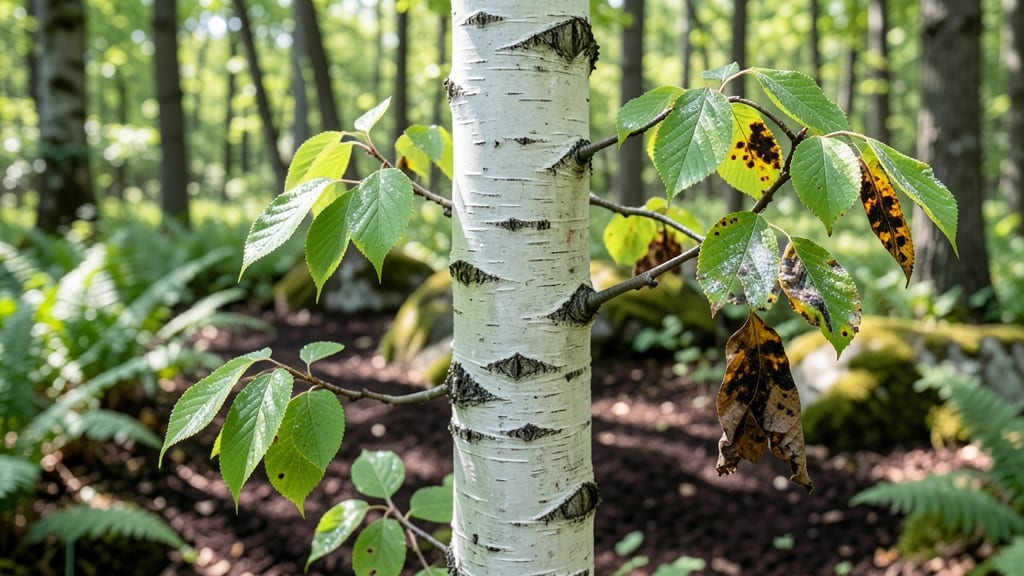
Those birch tree diseases turning your leaves yellow and spotted aren’t just an eyesore—they’re a serious warning sign. 🌿 I’ve seen healthy birch canopies turn into skeletal shadows when leaf spot or canker take hold, but early action can save them.
These fungal infections thrive in damp conditions, and once they set in, they spread faster than you’d expect.
The first sign is usually small, dark spots with yellow halos on the leaves—classic leaf spot. Canker shows up as sunken, dead patches on branches, often oozing sap. Both diseases weaken the tree over time, making it vulnerable to worse problems like borers.
The good news? You can stop them in their tracks with the right approach.
By pruning infected branches in dry weather and applying copper fungicide, you’ll see new growth pushing out within weeks. Healthy birch trees develop thick, papery bark that naturally resists disease, but it takes consistent care. The key is acting before the spots multiply or the cankers spread beyond control.
This works for both paper birch and river birch varieties, and the same principles apply whether you’re dealing with a young tree or a mature one. Let’s get those leaves back to their vibrant green and keep your birch thriving for years.
Root Causes Of Birch Leaf Damage
Understanding why birch tree leaves develop diseases like leaf spot or canker starts with identifying the environmental stressors, pathogens, and tree vulnerabilities at play. These issues rarely occur in isolation—they’re often the result of a perfect storm of conditions. Let’s break down the key culprits and how they trigger problems.
Fungi are the #1 cause of birch leaf diseases, including Birch Leaf Spot (caused by Marssonina betulae) and Canker (often Nectria or Botryosphaeria species). Here’s why they thrive:
- Moisture-Loving Nature 💧 Fungal spores need water to germinate and infect leaves. Rain, dew, or overhead irrigation create a soggy leaf surface, allowing spores to cling and penetrate. Birch trees in shady, humid microclimates (like dense forests or poorly drained soil) are especially susceptible.
- Warm, Wet Weather 🌡️ Temperatures between 60–75°F (15–24°C) with high humidity (70%+) create ideal fungal growth conditions. If spring or summer bring frequent rain showers, outbreaks surge.
- Weakened Tree Defense 🛡️ Stressed birches (from drought, poor soil, or pest damage) have thinner cuticles and reduced antifungal compounds, making them easy targets. Fungi exploit these gaps like a lockpick on an open door.
Diseases don’t just appear—they hijack trees already struggling. Common stressors include:
- Poor Soil Drainage or Nutrients 🪴 Birches hate soggy roots. Waterlogged soil starves roots of oxygen, leading to chlorosis (yellowing) and weakened vascular systems. Malnourished trees can’t fight off infections, making leaves prime targets for fungal spots.
- Drought Followed by Heavy Rain 💦 A dry spell dries out leaf tissue, then sudden rain shocks the tree, causing cellular damage. This creates entry points for fungi like Marssonina, which thrives in these conditions.
- Physical Injury from Pruning or Wind ⚡ Improper pruning cuts (too close to branches) or wind tears expose fresh wounds. Fungi like Nectria infect these sites, forming cankers (sunken, dead patches on bark) that spread to leaves.
Some insects don’t just feed—they deliver pathogens. Here’s how:
- Birch Leafminers & Sawflies 🐛 Their larvae burrow into leaves, creating tunnels and skeletonized patterns. These wounds disrupt leaf tissue, making it easier for fungal spores to latch on.
- Scale Insects & Aphids 🐜 These sap-suckers weaken leaves by removing nutrients, leaving them stunted and vulnerable. Their honeydew (sticky residue) also attracts sooty mold, a secondary fungal infection that darkens leaves.
- Borers (Bronze Birch Borer) 🪲 The #1 killer of mature birches, this beetle’s larvae tunnel under bark, disrupting the tree’s vascular system. A compromised tree can’t transport water/nutrients, leading to leaf scorch and disease susceptibility.
Even well-meaning gardening habits can invite trouble:
- Overhead Watering 💦 Sprinklers wet foliage, turning leaves into fungal breeding grounds. Drip irrigation (at the base) is a game-changer for birch health.
- Ignoring Mulch & Debris 🍂 Thick mulch piles or fallen leaves trap moisture against the trunk, creating ideal fungal conditions. Always keep mulch 2–3 inches deep and 6 inches away from bark.
- Planting Birches Too Close 🌳 Crowded trees reduce airflow, increasing humidity around leaves. Space birches 15–20 feet apart to improve circulation and reduce disease risk.
Disease timing isn’t random—it’s season-dependent:
| Season | Trigger | Disease Risk |
|---|---|---|
| Early Spring | Cool, wet conditions | Marssonina (leaf spot) spores germinate |
| Late Spring | Frequent rain + warm nights | Fungal growth accelerates |
| Summer | Drought stress + sudden storms | Canker fungi exploit weak bark |
| Fall | Leaf litter + high humidity | Secondary infections (sooty mold) |
Many birch diseases start small but spiral if left unchecked:
- Fungal spores land on a stressed leaf.
- Moisture activates the spores, creating lesions.
- Lesions spread, blocking sunlight and reducing photosynthesis.
- Tree weakens further, inviting more pests/diseases.
- Cankers form on branches, girdling the tree (cutting off nutrient flow).
Break the cycle early—prune infected branches 12 inches below visible damage and sterilize tools with rubbing alcohol to prevent spread.
Fixing Birch Tree Leaf Issues
Birch trees are stunning additions to any landscape, but when their leaves start showing signs of disease—like spots, discoloration, or cankers—it’s time to take action. The good news? Most birch tree leaf problems are treatable with the right approach.
Below, we’ve mapped out practical solutions for common diseases, from quick fixes to long-term prevention. Let’s get your birch tree back to its healthy, vibrant self!
Fungal leaf spots are among the most common birch tree diseases, often appearing as dark, irregular patches on leaves. If left unchecked, they can weaken the tree and even cause premature leaf drop.
🔥 Step 1: Prune Infected Branches
- 🌿 Remove and dispose of severely infected leaves and branches. Avoid composting them—burn or trash them to prevent spores from spreading.
- ✂️ Use sterilized pruners (wipe with rubbing alcohol between cuts) to avoid cross-contamination.
🍳 Step 2: Apply Fungicide
- 💧 Choose a copper-based or sulfur fungicide (like Neem Oil or Fungicide 3-in-1).
These are effective against fungal spores. - 🌧️ Apply in the early morning or late evening when humidity is high (fungi thrive in damp conditions). - 📅 Reapply every 7–14 days during wet seasons or after heavy rain.
👨🍳 Step 3: Improve Air Circulation
- 🌳 Thin out dense foliage to allow sunlight and air to reach the inner branches.
- 🌱 Avoid overwatering—birch trees prefer well-draining soil. Water at the base, not overhead.
💡 Prevention Tips for Fungal Spots
- 🌡️ Mulch properly (2–4 inches of organic mulch) to prevent soil-borne fungi from splashing onto leaves.
- ✨ Clean up fallen leaves regularly to remove fungal spores.
- 🎯 Plant birch trees in full sun (they need at least 6 hours of sunlight daily).
Cankers are sunken, dead patches on the bark that can girdle branches and kill sections of the tree. If your birch has oozing cankers or dying branches, act fast!
🔪 Step 1: Prune Infected Areas Aggressively
- ⚠️ Cut out cankered branches at least 6–12 inches below the affected area—healthy tissue should be visible.
- 🔥 Sterilize tools between cuts to prevent spreading the disease.
- 🗑️ Remove infected wood immediately—do not leave it in the yard.
🧴 Step 2: Seal Wounds (If Necessary)
- For small cankers, apply pruning sealant (like Tanglefoot Tree Wound Pruning Seal) to protect against further infection.
- ❌ Skip sealing large wounds—birch trees heal better with open pruning cuts.
🌧️ Step 3: Boost Tree Health
- 💧 Water deeply but infrequently—birch trees hate soggy roots.
Aim for 1–1.5 inches of water per week. - 🌱 Fertilize in early spring with a balanced, slow-release fertilizer (like 10-10-10) to strengthen the tree. - 🍄 Avoid wounding the bark—use caution when mowing or trimming near the trunk.
💡 Prevention Tips for Cankers
- 🌡️ Avoid overwatering—excess moisture encourages fungal growth.
- 🎯 Plant birch trees in well-draining soil—poor drainage is a major risk factor.
- ✨ Inspect trees annually for early signs of cankers, especially after storms or heavy pruning.
Even after treating specific issues, preventative care is key to keeping your birch tree healthy long-term.
🌞 Light & Spacing
- 🌅 Birch trees need full sun—plant them where they get at least 6 hours of sunlight daily.
- 📏 Space trees properly (15–20 feet apart) to improve airflow and reduce humidity around the canopy.
💧 Watering Best Practices
- 🌧️ Water deeply but less frequently—birch trees have shallow roots and prefer consistent moisture.
- 🚫 Avoid overhead watering—wet leaves encourage fungal growth.
🌱 Soil & Mulching
- 🌿 Use organic mulch (like wood chips) to retain moisture and regulate soil temperature.
- ⚠️ Keep mulch 3–4 inches away from the trunk to prevent rot.
🛡️ Proactive Disease Control
- 🍄 Apply a preventative fungicide in early spring before new leaves emerge.
- 🌿 Monitor for pests (like birch borers) that can weaken the tree and make it more susceptible to disease.
Final Thought: 🌟 With the right care, your birch tree can bounce back from disease—and even thrive! Start with pruning, fungicides, and proper watering, then focus on long-term prevention to keep those beautiful leaves healthy and vibrant. Happy gardening!
Frequently asked questions
Why do birch leaves get yellow spots even after I water them regularly?
Yellow spots with dark edges are likely birch leaf spot, caused by the fungus Marssonina betulae. Overwatering isn't the issue—it's excess moisture on leaves that spreads spores. Try watering at the base (not overhead) and applying a copper fungicide. Poor air circulation from dense foliage can also worsen the problem.
Can I save my birch tree if cankers are oozing sap from the trunk?
Yes, but act fast! Prune infected branches 6-12 inches below the canker and sterilize tools between cuts. For small cankers, seal with pruning sealant. The key is removing infected tissue—don't wait until the canker girdles the branch. Healthy birches recover well when you catch it early.
Is it safe to compost leaves with fungal spots?
No—never compost infected leaves! Fungal spores survive composting and can reinfect your trees. Burn or trash severely spotted leaves immediately. For mild cases, bag them in a sealed plastic bag for 2-3 weeks to kill spores before disposal.
How often should I inspect my birch tree for early disease signs?
Check your birch monthly during growing season (spring-fall) and weekly after heavy rain. Look for tiny dark spots (leaf spot) or sunken bark patches (canker). Early detection gives you the best chance to treat before the disease spreads. A quick 5-minute inspection can save your tree!
Will my birch tree grow back healthy leaves after treatment?
With proper care, birch trees are resilient. After treating fungal issues, you'll typically see new healthy leaves within 4-6 weeks. The key is consistency—keep pruning infected branches, maintain proper watering, and apply fungicide as needed. Young trees may need more frequent monitoring than mature ones.