
Pests and Diseases
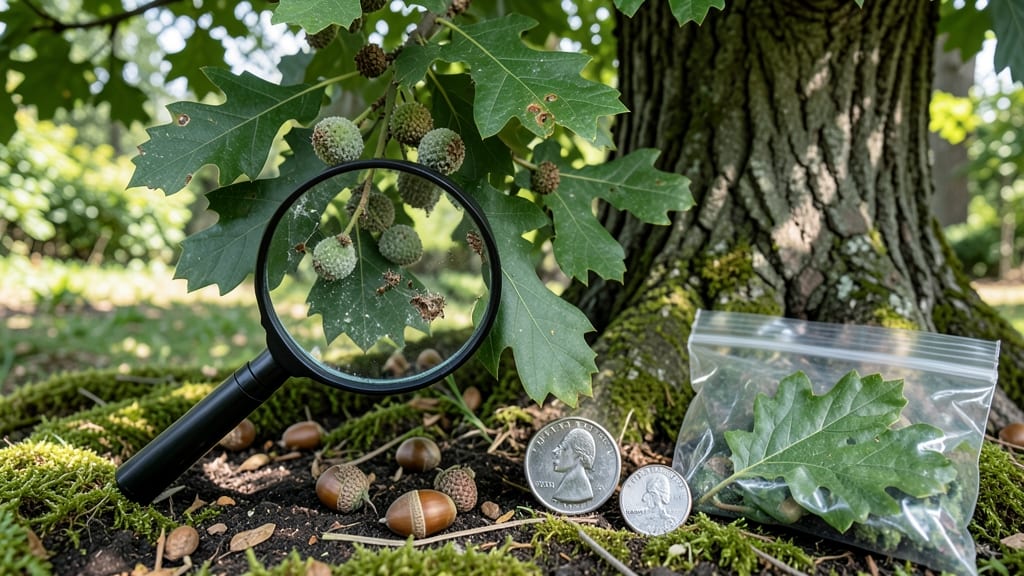
That fuzzy black growth on oak tree leaves isn't just dirt—it's likely a fungal blight like anthracnose or powdery mildew, and copper spray is the eco-friendly cure you need. 🌿 I've battled this exact problem on my mature oak, where the leaves started curling and spotting mid-summer, and learned the telltale signs that distinguish harmless lichen from damaging fungal infections.
The key is acting fast—once those dark spots spread, they weaken the tree's ability to photosynthesize, leaving it vulnerable to pests too.
Copper fungicide works because it disrupts the fungal spores' cell walls without harming beneficial insects, and you can apply it safely during the growing season when the tree is actively pushing new leaves.
What you'll end up with is leaves that stay vibrant green, not speckled with black or gray, and a tree that maintains its strength through droughts and heatwaves.
The copper spray treatment only takes 15-20 minutes per application, and with two treatments spaced 7-10 days apart, you'll see noticeable improvement within weeks.
Works for all oak varieties—white, red, or pin—whether you're dealing with a young tree or a century-old giant. The same method prevents future outbreaks, so you won't have to repeat the process year after year.
Root Causes Behind Leaf Growth
When you spot unusual growths on oak tree leaves—whether fuzzy, powdery, or slimy—it’s rarely a coincidence. These symptoms are your tree’s way of signaling distress, often triggered by microscopic invaders or environmental stress.
Below, we break down the most common culprits behind abnormal leaf growth, why they happen, and how they exploit your oak’s defenses.
Fungi are the #1 cause of unsightly growths on oak leaves, thriving in damp, shaded conditions. Unlike plants, fungi don’t photosynthesize—they consume organic matter, including your tree’s nutrients. Here’s how they take hold:
- Spores in the Air: Fungal spores (like those from anthracnose or powdery mildew) float on wind or rain, landing on leaves. If humidity stays above 70% for prolonged periods, spores germinate and spread rapidly. 🌧️
- Weakened Tree Defense: Oak trees stressed by drought, poor soil, or pest damage are far more vulnerable. Fungi exploit these gaps, often starting as tiny yellow spots that turn into fuzzy or tar-like growths.
- Host-Specific Strains: Some fungi, like Gnomonia veneta (tar spot), specialize in oaks. They produce toxins that disrupt the tree’s ability to absorb sunlight, leading to stunted growth and leaf drop.
Actionable Insight: Fungal growths often appear in wet springs or humid summers. If you see black, velvety spots or white powder, it’s a fungal red flag. Prune for airflow and apply copper fungicide at the first sign.
Some leaf growths aren’t from fungi at all—they’re pest byproducts. Insects like aphids, scale, or mites don’t just chew leaves; they excrete honeydew, a sticky sugar-rich waste that becomes a buffet for sooty mold fungi. Here’s the chain reaction:
| Pest | Growth Type | Why It Happens |
|---|---|---|
| Oak lace bugs | Stippled, yellowing leaves with black sooty mold (fungus fed by honeydew) | Lace bugs pierce cells to suck sap, weakening leaves. Their honeydew attracts mold, creating a secondary infection. |
| Aphids | Cottony, white woolly masses (aphid colonies + mold) | Aphids cluster on new growth, excreting honeydew. The sugar attracts cladosporium fungi, which grow into fuzzy white webs. |
| Spider mites | Silvery webbing or rust-colored spots (mite damage + mold) | Mites feed on leaf surfaces, creating wounds. Their waste + saliva mix with fungal spores, leading to secondary infections. |
Pro Tip: If growth looks sticky or webby, inspect the underside of leaves for tiny pests. A strong blast of water or neem oil can disrupt their life cycle before fungi move in. 💦
Not all leaf growth is biological—sometimes, it’s your oak’s physical response to harsh conditions. Extreme heat, poor drainage, or nutrient deficiencies can force trees to overproduce abnormal tissue as a survival tactic.
- Nutrient Imbalance:
- Too much nitrogen (from fertilizers) can cause lush but weak new growth, making leaves prone to fungal infections.
- Deficiencies in magnesium or zinc lead to interveinal chlorosis (yellowing between veins), which stresses the tree and opens doors for pathogens.
- Poor Airflow: Dense foliage or overcrowded trees trap moisture, creating the perfect fungal incubator. Growths like powdery mildew thrive in these conditions.
- Extreme Temperature Swings: Sudden cold snaps followed by warm, humid days shock oak trees. This stress makes leaves more susceptible to bacterial leaf blight, which causes slimy, water-soaked patches.
Quick Fix: Test your soil’s pH and nutrient levels (aim for 6.0–7.0 pH for oaks). Thin out branches to improve airflow, and mulch 2–3 inches deep to regulate soil temperature. 🌱
Next up: How to spot the difference between fungal, pest-related, and environmental growths—before they spread.
Fixing Fungal Blight on Oak Leaves
Fungal blight and other unsightly growths on oak tree leaves can be frustrating, but with the right approach, you can restore your tree’s health and prevent future outbreaks.
Below are practical, step-by-step solutions tailored to the most common causes—fungal infections, bacterial issues, environmental stress, and pest-related damage—along with prevention tips to keep your oak tree thriving.
Fungal growths like anthracnose, powdery mildew, or leaf blight thrive in damp, shaded conditions. Here’s how to tackle them:
🔥 Step 1: Remove Infected Leaves & Debris
- 👨🍳 Gather tools: Wear gloves and a mask (fungal spores can irritate skin/respiratory systems).
Use pruning shears or a rake to collect fallen leaves and twigs. - 🔪 Prune strategically: Trim only severely infected branches (no more than 25% of the canopy) to avoid stressing the tree.
Dispose of debris in a sealed trash bag—do not compost. - ⏰ Best time: Early morning when spores are less airborne, or on a dry, wind-free day.
🥘 Step 2: Apply Copper Fungicide
Copper-based sprays (like copper sulfate or copper hydroxide) are highly effective against fungal blight.
Here’s how: - 📊 Mix ratio: Follow label instructions (typically 1–2 tbsp per gallon of water). - 🌧️ Timing: Spray before rain (or reapply after 24 hours if it rains).
Focus on: - Undersides of leaves (fungi often start here). - New growth (vulnerable to reinfection). - Trunk and branches (prevents upward spread). - 🔄 Frequency: Apply every 7–14 days until new leaves emerge fungus-free (usually 2–3 treatments).
🌡️ Step 3: Improve Airflow & Light
Fungi love humidity and shade. Break the cycle with:
- ✂️ Thin the canopy: Remove overcrowded branches to allow sunlight and air circulation.
- 💡 Install a fan: If your oak is in a sheltered spot (e.g., near a fence or dense shrubs), a low-speed oscillating fan on a timer can reduce humidity.
- 🌧️ Water wisely: Water early in the day so leaves dry quickly.
Avoid overhead sprinklers.
If sticky residue (honeydew) or tiny webs accompany leaf growth, sap-sucking pests like scale insects or spider mites may be the culprit.
🔥 Step 1: Blast Off Pests with Water
- 💦 High-pressure hose: Use a gentle spray (not a power washer) to dislodge pests from leaves and branches.
Repeat every 5–7 days for 2–3 weeks. - 🌿 Neem oil spray (optional): Mix 1 tsp neem oil + 1 tsp mild soap per quart of water. Spray undersides of leaves where pests hide.
🥘 Step 2: Introduce Beneficial Predators
- 🐞 Ladybugs or lacewings: Release 1,000–2,000 per tree (available at garden centers). They devour mites and scale.
- 🕷️ Predatory mites: Apply Phytoseiulus persimilis (a natural mite enemy) if spider mites are severe.
💡 Prevention Tip:
- 🌿 Mulch properly: Use wood chips (not fresh bark) 2–3 inches deep to deter pests. Keep mulch 6 inches away from the trunk.
- 🍎 Avoid broad-spectrum pesticides: They kill beneficial insects that control pests naturally.
Yellowing, curling, or stunted growth can signal nutrient imbalances or root rot from overwatering.
🔥 Step 1: Test Soil & Adjust Care
- 📊 Soil test kit: Check pH and nutrient levels (oaks prefer pH 5.0–7.0).
Amend soil with: - 🌱 Compost (for organic matter). - 💪 Slow-release fertilizer (high in iron, nitrogen, and potassium). - 💧 Watering fix: Oaks hate soggy roots. Water deeply but infrequently—1–2 inches per week (more in extreme heat).
🥘 Step 2: Aerate Compacted Soil
- 🔨 Core aeration: Rent a garden aerator or use a manual fork to create holes 6–12 inches deep around the drip line.
- 🌿 Top-dress with mycorrhizal fungi: This boosts root health and nutrient absorption.
Stop fungal and pest problems before they start with these easy habits: ✅ 🌿 Prune in late winter/early spring (before new growth spurs fungal activity). ✅ 🍂 Clean up fallen leaves in autumn (fungi overwinter in debris). ✅ 🌡️ Monitor humidity: Use a hygrometer—keep it below 60% near the tree. ✅ 🐝 Support pollinators: Healthy bees and birds naturally control pests. ✅ 🔄 Rotate treatments: If using fungicides, switch types annually to prevent resistance.
If your oak shows large dead patches, oozing cankers, or sudden leaf drop, it may need professional arborist care. Severe cases could indicate oak wilt disease or bacterial leaf scorch, which require specialized treatment.
💡 Pro Tip: Keep a tree care journal! Note when you prune, spray, or water—this helps track what works (or doesn’t) for your specific oak. With consistency, your tree can bounce back stronger than ever!
Frequently asked questions
What's the difference between lichen and fungal growth on oak leaves?
Lichen is harmless and actually benefits your oak by absorbing moisture and nutrients from the air. It appears as crusty, leafy, or shrubby growths in gray, green, or orange hues. Fungal growths, however, look fuzzy, powdery, or slimy (like black tar spots) and indicate disease. Lichen won't harm your tree, while fungi can weaken it over time.
Can copper spray hurt my oak tree or nearby plants?
When used correctly, copper fungicide is safe for oaks and most plants. However, avoid spraying when flowers are open (it can harm pollinators) or on windy days. For extra safety, apply in the early morning when bees are less active. Always follow label instructions for dilution ratios.
How do I know if the growth is spreading or getting worse?
Check for these signs: new dark spots appearing on healthy leaves, more leaves dropping than usual, or growth spreading to branches/trunk. Take photos weekly to compare progress. If you see more than 25% of leaves affected or the tree looking stressed (wilting, stunted growth), it's time to escalate treatment or call an arborist.
Will pruning help if my oak already has fungal growth?
Yes, but only remove branches with severe infection (more than 50% affected leaves). Never prune more than 25% of the canopy at once. Focus on improving airflow by thinning dense areas. Always sterilize your pruners with rubbing alcohol between cuts to prevent spreading spores.
How long until I see improvement after treating fungal growth?
With proper treatment (copper spray + pruning), you should see new leaves emerging fungus-free within 3-4 weeks. Complete recovery may take 2-3 months, especially for mature trees. Consistency is key—stick to your treatment schedule even if improvement seems slow.