
Pests and Diseases
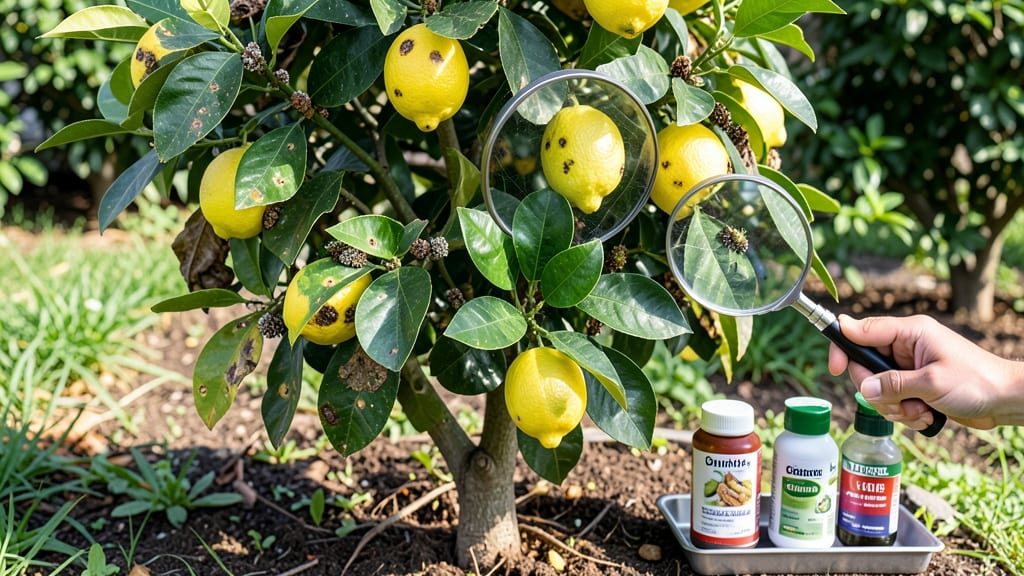
Your lemon tree’s yellowing leaves could signal lemon tree diseases and pests—or just a nutrient deficiency. 🌿 I’ve seen citrus canker turn a thriving tree into a sad skeleton in weeks, but early detection is your best defense.
The key is knowing what to watch for before symptoms spiral out of control.
Most problems start with tiny signs: sticky residue from aphids, tiny holes from leaf miners, or dark spots that ooze when touched. My first citrus tree nearly died from root rot because I ignored the foul smell coming from the soil.
The good news? These issues are fixable with the right tools—organic sprays, pruning techniques, and soil checks.
By the time you spot the first symptoms, you’ll already have a plan: copper sprays for canker, neem oil for pests, or adjusting watering to prevent rot. Healthy trees produce hundreds of lemons per season, while neglected ones struggle with stunted growth and bitter fruit.
Whether you’re growing in a container or in-ground, these solutions work for any climate. The secret is checking your tree weekly—before the pests or diseases get the upper hand. Let’s keep that citrus thriving!
Root Causes Behind Tree Stress
Lemon trees, like all plants, are vulnerable to diseases and pests when their natural defenses weaken. Understanding the underlying triggers helps you take proactive steps to protect your tree. These issues often stem from environmental, biological, or cultural factors—some preventable, others influenced by nature.
Below, we break down the key reasons why lemon trees fall prey to problems, so you can address them before they escalate.
Extreme or inconsistent environmental conditions create prime opportunities for pests and pathogens to attack. Lemon trees thrive in specific conditions, and deviations can stress them out, lowering their resistance.
- 🔥 Heat and Drought
- Why it happens: Lemon trees are native to Mediterranean climates, where hot, dry summers are balanced by mild winters. Prolonged drought or scorching heat forces the tree to divert energy from growth to survival, weakening its cell walls and making it susceptible to fungal infections (like Phytophthora) or spider mites.
- Science behind it: Under drought stress, the tree’s stomata (pores) close to conserve water, reducing gas exchange. This creates a humid microclimate on leaves, ideal for fungal spores to germinate. Additionally, heat-stressed trees produce less chlorophyll, turning yellow—a signal to pests like aphids that the tree is weak.
- Actionable fix: Water deeply 1–2 times per week (depending on soil type) during dry spells, and use mulch to retain moisture. Avoid overhead watering, which can promote fungal growth.
- ❄️ Cold or Frost Damage
- Why it happens: Lemon trees are evergreen and sensitive to temperatures below 25°F (-4°C). Cold snaps can kill leaf tissue, creating entry points for bacterial infections (e.g., Xanthomonas) or attracting sap-sucking pests like scale insects.
- Science behind it: Freezing temperatures rupture cell membranes, releasing sugars that attract opportunistic microbes. Damaged leaves also lose their waxy cuticle, making them more permeable to pathogens.
- Actionable fix: Protect young trees with frost cloths or move potted trees to sheltered areas. In cold climates, plant near south-facing walls to absorb heat during the day.
- 🌧️ Overwatering or Poor Drainage
- Why it happens: Lemon trees hate soggy roots. Overwatering or compacted soil leads to root rot (caused by Phytophthora or Pythium fungi), which strangles the tree’s nutrient uptake system.
- Science behind it: Waterlogged soil depletes oxygen in the root zone, forcing roots to switch to anaerobic respiration—a process that produces toxic byproducts (like ethanol) and kills root cells. Weak roots can’t support the tree’s immune system, making it easy prey for pests like citrus root weevils.
- Actionable fix: Ensure pots have drainage holes and use well-draining soil mixes (e.g., 60% soil, 30% perlite, 10% compost). Test soil moisture by sticking your finger 2 inches deep—water only if dry.
Some issues arise from the tree’s own biology or the presence of hidden threats in the soil and air. These are harder to predict but critical to monitor.
- 🌱 Poor Soil Health
- Why it happens: Lemon trees require slightly acidic to neutral soil (pH 6.0–7.0) and nutrients like nitrogen, phosphorus, and micronutrients (e.g., zinc, iron). Deficient or imbalanced soil leads to stunted growth, making trees vulnerable to pests like citrus leaf miners or diseases such as citrus greening (HLB).
- Science behind it: Nutrient deficiencies (e.g., iron chlorosis) weaken the tree’s chloroplasts, reducing photosynthesis. This starves the tree of energy, impairing its ability to produce defensive compounds like limonoids (natural pest repellents).
- Actionable fix: Conduct a soil test every 2–3 years and amend soil with citrus-specific fertilizer (high in nitrogen but balanced with micronutrients). Add organic matter like compost to improve soil structure.
- 🦠 Pathogen Buildup in the Environment
- Why it happens: Diseases like anthracnose or citrus canker thrive in humid, warm conditions and can persist in old plant debris, tools, or even water. If your tree was previously infected, spores may linger, reinfecting new growth.
- Science behind it: Fungal spores can remain dormant for years in organic matter. When conditions (like high humidity + 75–85°F) become favorable, they germinate and infect through natural openings (e.g., leaf stomata or wounds).
- Actionable fix: Sterilize pruning tools with rubbing alcohol between uses. Remove and dispose of infected leaves/fruit (do not compost). Improve air circulation with pruning to reduce humidity near the canopy.
- 🐜 Pest Infestations as a Chain Reaction
- Why it happens: Pests like aphids or mealybugs don’t just damage leaves—they excrete honeydew, a sticky substance that attracts sooty mold fungi. This mold blocks sunlight, further stressing the tree and creating a cycle of decline.
- Science behind it: Honeydew is rich in sugars, providing food for mold spores. The mold coats leaves, reducing photosynthesis by up to 50% in severe cases. Weakened trees are then more attractive to secondary pests, like citrus psyllids (which spread HLB).
- Actionable fix: Blast pests off with a strong stream of water or use neem oil (a natural fungicide and insecticide). Prune heavily infested branches and dispose of them in sealed bags.
Even the best-intentioned care can backfire if not tailored to a lemon tree’s needs. These human errors often go unnoticed until problems arise.
- 🍄 Over-Pruning or Improper Techniques
- Why it happens: Pruning is essential, but aggressive or incorrect cuts (e.g., removing too many leaves at once) shock the tree, reducing its ability to fight off infections. Additionally, using dirty tools can introduce pathogens.
- Science behind it: Pruning removes photosynthetic tissue, temporarily lowering the tree’s energy reserves. If not done in
Quick Fixes for Lemon Tree Woes
When your lemon tree shows signs of distress, acting fast can make all the difference! Below are practical, step-by-step solutions for common diseases and pests, along with prevention tips to keep your tree thriving.
Whether it’s fungal infections, sap-sucking bugs, or nutrient deficiencies, these fixes are designed to be easy to follow and effective.
Fungal infections like citrus scab, anthracnose, or root rot thrive in damp conditions. Here’s how to treat and prevent them:
🔥 Treat Citrus Scab & Anthracnose
- Prune infected branches 🪓 – Use sterilized pruners (wipe with rubbing alcohol) to remove yellowing, spotted, or mushy leaves/fruit. Dispose of them in the trash (not compost).
- Apply fungicide 🍄 – Spray with a copper-based fungicide (like Copper Soap or Neem Oil) every 7–10 days until symptoms fade. Follow label instructions for dilution.
- Improve airflow 🌬️ – Thin out dense foliage to reduce humidity near the tree. Avoid overhead watering.
💡 Prevention Tips
- Water at the base (not leaves) to keep foliage dry.
- Space trees properly (6–10 ft apart) for better air circulation.
- Clean up fallen leaves regularly to remove fungal spores.
Pests like aphids, citrus leaf miners, scale insects, and spider mites can drain your tree’s vitality. Here’s how to evict them for good:
🍳 Blast Aphids & Scale Off
- Blast them off 💦 – Use a strong stream of water (from a hose) to dislodge aphids and scale from leaves and branches.
- Apply insecticidal soap 🧼 – Mix 1.5 tbsp mild dish soap + 1 quart water and spray directly on pests (test on a small area first). Reapply every 5–7 days.
- Introduce beneficial insects 🐞 – Ladybugs and lacewings eat aphids naturally.
Buy them online or attract them with neem oil sprays.
👨🍳 Stop Citrus Leaf Miners
- Scrape out larvae 🪒 – Use a dull knife or cotton swab to remove white, worm-like larvae from leaf mines.
- Spray neem oil 🌿 – Mix 1 tsp neem oil + 1 tsp mild soap + 1 quart water.
Spray every 5 days until no new mines appear. 3. Cover young trees 🛡️ – Use fine mesh netting to block adult flies from laying eggs.
🌡️ Tame Spider Mites
- Wipe leaves with soapy water 🧼 – Dampen a cloth with soapy water and gently rub mites off.
- Spray with horticultural oil 🛢️ – Mix 1 tbsp horticultural oil + 1 tsp soap + 1 quart water.
Spray every 7 days for 2–3 weeks. 3. Increase humidity 🌧️ – Mites love dry air. Mist leaves or use a humidifier nearby.
- Inspect trees weekly 🔍 – Catch pests early before they multiply.
- Encourage natural predators 🐝 – Plant marigolds, basil, or dill nearby to attract beneficial insects.
- Avoid over-fertilizing 🚫💩 – Too much nitrogen attracts soft-bodied pests like aphids.
Yellow leaves or stunted growth? Your lemon tree might be hungry or thirsty.
📊 Fix Iron & Nitrogen Deficiencies
- Test soil pH 🧪 – Lemon trees prefer slightly acidic soil (pH 6.0–7.0). Use a soil test kit to check.
- Add iron chelate 🔄 – For yellow leaves with green veins, sprinkle iron sulfate around the base and water deeply.
- Use balanced fertilizer 🌱 – In early spring, apply a 10-10-10 or citrus-specific fertilizer (follow package rates).
💪 Boost Citrus Health
- Mulch properly 🌿 – Use 2–3 inches of wood chips to retain moisture and regulate soil temp.
- Water deeply but less often 💦 – 1–1.5 inches per week (more in extreme heat). Avoid soggy soil.
If your tree is severely infected or infested:
- Isolate the tree 🚫 – Keep it away from healthy plants to prevent spread.
- Call a local arborist 🌳 – For advanced fungal diseases (like root rot) or heavy pest outbreaks, professional help may be needed.
- Replace if necessary 🔄 – If the tree is beyond saving, remove it and sterilize the soil before planting a new one.
Final Tip: 🎯 Act fast, but stay patient. Some issues take weeks to fully resolve, but consistent care will keep your lemon tree healthy, productive, and pest-free!
Frequently asked questions
How do I tell if my lemon tree has citrus canker?
Look for raised, crusty lesions on leaves and fruit that ooze yellow liquid when touched. The edges of these spots often turn brown, and infected leaves may drop prematurely. Early detection is key—remove affected parts immediately and sterilize your tools with rubbing alcohol.
What's the best organic treatment for spider mites?
Start with a soapy water spray (1 tbsp mild dish soap + 1 quart water) applied to both leaf surfaces. For stubborn infestations, mix 1 tbsp horticultural oil + 1 tsp soap + 1 quart water and spray every 7 days for 2-3 weeks. Increase humidity around your tree to discourage these pests.
Can I save my lemon tree if it has root rot?
Early cases may be reversible! First, stop watering and check for black, mushy roots. Prune any affected roots with sterilized tools, then repot in fresh, well-draining soil. Apply a beneficial fungus treatment like mycorrhizae to help recovery. Severe cases may require professional help.
How often should I inspect my lemon tree for pests?
Check your tree weekly during growing seasons (spring-fall) and biweekly in winter. Focus on the undersides of leaves where pests hide, and examine new growth first. Early detection prevents small problems from becoming major infestations.
Will neem oil work on all lemon tree pests?
Neem oil is effective against soft-bodied pests (aphids, mealybugs, whiteflies) and some fungal diseases, but it won't kill hard-shelled pests like scale insects. For scale, use a strong water spray first, then apply horticultural oil. Always test on a small area first to avoid leaf damage.