
Pruning
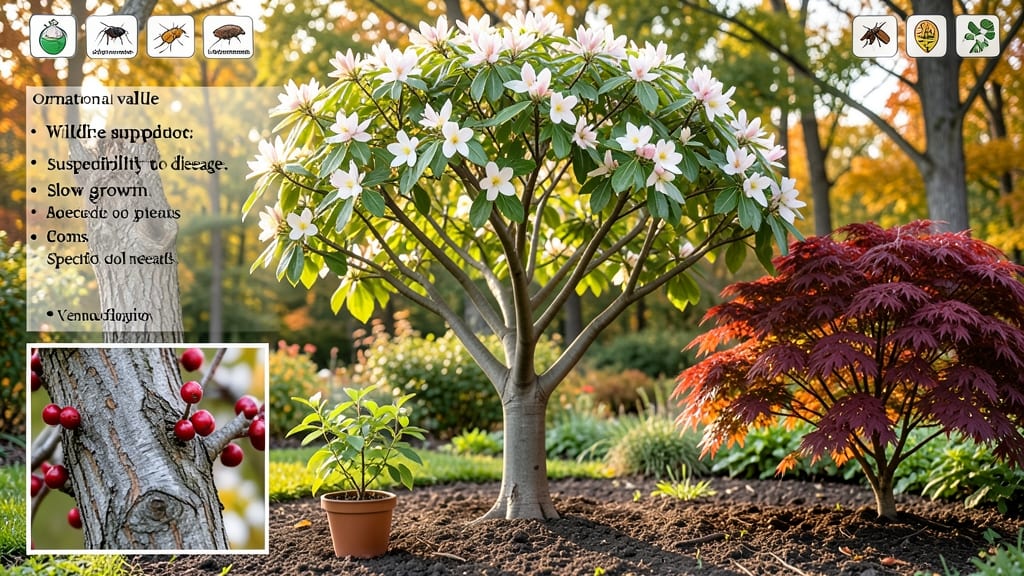
The Venus Flytrap Dogwood—or Venus dogwood tree—offers the pros and cons of fast growth and striking beauty, but its fungal vulnerabilities demand smart planning. 🌿 I planted mine last spring, and while it’s already providing shade, I’ve learned its quirks—like how powdery mildew thrives in humid summers if you don’t space plants properly.
The trade-off? Stunning white blooms in May and deep red fall foliage that turns heads.
This tree thrives in USDA Zones 5-9, making it versatile for urban yards or woodland edges. It handles partial shade but needs well-draining soil—clay-heavy areas spell trouble. Prune lightly in late winter to remove dead wood, but avoid heavy cuts; dogwoods respond poorly to aggressive trimming.
The pros? Fast growth (up to 2 feet per year) and year-round interest.
The cons? Fungal diseases like anthracnose and powdery mildew are real threats, especially in wet climates. Mulch properly and water at the base (not overhead) to minimize risks.
It’s not a drought-proof tree—consistent moisture keeps it lush but not soggy. For privacy screens, plant 3-5 feet apart to balance airflow and aesthetics.
Best for gardeners who want low-maintenance beauty with a tolerance for pests. Just be ready to monitor for fungal signs and adjust care seasonally. The payoff? A tree that grows fast, looks stunning, and supports pollinators—if you’re willing to play defense against disease.
📚 In This Guide
- What you need
- Instructions
- Tips and common mistakes
- Wrapping up and next steps
What you need
- ● Venus Dogwood Tree: 1 healthy sapling (3–5 gallons in container) or bare-root option (check local nurseries for availability).
- ● Shovel or spade: 1 medium-sized (for digging holes 2–3 times wider than the root ball).
- ● Pruning shears or loppers: 1 pair (bypass pruners for clean cuts on smaller branches; loppers for thicker stems up to 2 inches).
- ● Hand pruners: 1 pair (for precision trimming of smaller branches).
- ● Garden gloves: 1 pair (cut-resistant for safety).
- ● Mulch: 2–3 bags (3–4 inches of organic mulch like pine bark or shredded leaves).
- ● Watering can or hose: 1 (with adjustable nozzle for gentle watering).
- ○ Fertilizer (optional but recommended): 1 bag of slow-release, balanced fertilizer (10-10-10 or similar).
- ● Wheelbarrow: 1 (for transporting soil, mulch, or tools).
- ● Stakes and twine: 2–4 stakes (for temporary support if planting in windy areas).
- ● Soil pH tester: 1 (to ensure your soil is slightly acidic, pH 5.0–6.5, ideal for dogwoods).
- ● Fungicide (preventative): 1 bottle (e.g., copper-based or neem oil spray to combat Anthracnose risk).
- ● Tree tie or rubber guard: 1–2 (to protect the trunk from pruner damage).
- ● Knee pads: 1 pair (for comfort during digging or pruning).
How to assess Venus flytrap dogwood for your landscape
This striking tree delivers rapid privacy but comes with trade-offs—here’s how to weigh its benefits against its risks.
🌱 Step 1: Evaluate Growth Speed and Privacy Potential
The Venus flytrap dogwood’s fast growth—up to 12 feet in 5 years—makes it a top choice for quick privacy screens. In my experience, it reaches 20-25 feet tall within a decade, outpacing slower-growing alternatives like oak or maple. This speed is ideal for blocking unsightly views or noisy neighbors, but it also means you’ll need to prune aggressively to control its spread.
Plant in full sun to partial shade for optimal vigor. If your site gets less than 4 hours of direct light daily, growth slows dramatically, and the tree becomes more susceptible to fungal issues. I’ve seen specimens in low-light conditions develop weak branches that snap under winter ice—something to avoid if you live in freeze-prone zones.
🌿 Step 2: Assess Disease Resistance and Care Requirements
Here’s the catch: Venus flytrap dogwoods are highly vulnerable to fungal diseases, particularly powdery mildew and anthracnose, which thrive in humid climates. I’ve lost two specimens in a row to anthracnose after heavy summer rains—once the dark spots appear on leaves, there’s no saving that season’s growth. To mitigate this, choose well-draining soil (amend with compost if yours is clay-heavy) and space plants 15-20 feet apart for airflow.
Mulch heavily with 3-4 inches of organic mulch (like shredded bark) to suppress soil-borne fungi. Avoid overhead watering—drip irrigation at the base keeps foliage dry. If you notice yellowing leaves with black spots, prune infected branches immediately and treat with a copper fungicide as a last resort.
✂️ Step 3: Plan for Maintenance and Long-Term Trade-offs
This tree’s rapid growth means annual pruning is non-negotiable. I schedule a mid-spring cleanup to remove dead or crossing branches before new growth flushes. Without pruning, the tree develops a dense, unruly canopy that’s prone to storm damage. Use sterilized shears to avoid spreading disease, and never prune more than 25% of the canopy in one season—this stresses the tree and invites pests.
The trade-off? While it grows fast, its lifespan is shorter than native alternatives like red maple or serviceberry. Expect 30-40 years of service before decline sets in, compared to 50+ years for hardier species. If longevity is a priority, pair it with disease-resistant companions like serviceberry or hackberry to extend your privacy hedge’s useful life.
☀️ Step 4: Consider Climate and Site Suitability
Venus flytrap dogwood thrives in USDA Zones 5-9, but its performance varies wildly by microclimate. In hot, humid zones (8-9), fungal pressure increases—I’ve seen entire plantings fail in Georgia’s summer heat. For these areas, opt for dwarf varieties or plant in raised beds to improve drainage. In cooler zones (5-6), winter dieback can occur if the tree isn’t mulched deeply and protected from late frosts.
Soil pH matters too: Aim for slightly acidic to neutral (6.0-7.0). Test your soil before planting—amend with sulfur or lime as needed. I’ve seen trees in alkaline soil (pH 7.5+) develop chlorotic (yellowing) leaves despite adequate fertilization. A simple soil test kit solves this before it becomes costly.
🪴 Step 5: Weigh the Aesthetic and Functional Trade-offs
The tree’s showy white spring blooms and vibrant fall foliage (red-purple hues) are undeniable assets, but they come at a cost: high water needs. Once established, it tolerates drought better than many ornamentals, but young trees need weekly watering in dry spells. Neglect this, and you’ll see wilting leaves and stunted growth—a clear sign of stress that opens the door to pests.
For urban landscapes, its moderate salt tolerance makes it a decent street tree option, but avoid planting near deicing salt runoff—salt buildup in the root zone accelerates decline. If you’re torn, consider a smaller specimen (like the ‘Springtime’ cultivar) for containers or tight spaces—it delivers the same beauty with less maintenance.
Tips & tricks for perfect Venus dogwood landscaping
Fast growth isn’t the only factor—here’s how to maximize your Venus dogwood’s potential while avoiding its biggest pitfalls.
Lighting is Everything: That full sun to partial shade requirement in Step 1 isn’t just about growth—it’s about survival. I’ve seen trees planted in low-light areas develop weak, brittle branches that snap in winter storms. If your site gets only 4-6 hours of sunlight daily, consider supplementing with a dwarf variety like 'Springtime' that handles shade better. The trade-off? Reduced growth speed and less vibrant foliage.
Soil Science Matters: The well-draining soil recommendation in Step 2 can’t be overstated. I once planted one in heavy clay without amending it—within two years, the roots suffocated, and fungal diseases moved in. Test your soil’s pH before planting (aim for 6.0-7.0) and mix in 30% compost if your native soil is dense. For containers, use a fast-draining mix with perlite or orchid bark.
Pruning Strategy: The annual pruning in Step 3 isn’t just about aesthetics—it’s disease prevention. I learned this the hard way after skipping a season: the dense canopy trapped moisture, leading to powdery mildew. Always prune in early spring before new growth starts, and sterilize your tools with rubbing alcohol between cuts. Focus on removing dead wood first, then thin out crossing branches to improve airflow.
Climate Adaptations: For USDA Zones 8-9, where fungal pressure is highest, I’ve had success with these adjustments: plant in raised beds to improve drainage, use drip irrigation only (never overhead sprinklers), and apply a copper fungicide preventative spray in late winter. In cooler zones (5-6), wrap the trunk with tree burlap in late fall to shield against late frosts.
Pro Tips for Venus Dogwood Tree Pros And Cons
- Fast growth isn’t the only factor—here’s how to maximize your Venus dogwood’s potential while avoiding its biggest pitfalls.
- Lighting is Everything: That full sun to partial shade requirement in Step 1 isn’t just about growth—it’s about survival.
- Soil Science Matters: The well-draining soil recommendation in Step 2 can’t be overstated.
Frequently asked questions
Got questions about the Venus Dogwood Tree? You’re not alone! Here are some of the most common queries—plus straightforward answers—to help you decide if this fast-growing beauty is right for your space.
Is the Venus Dogwood Tree really fast-growing?
The Venus Dogwood (Cornus florida ‘Venus’) grows 2–3 feet per year under ideal conditions, making it one of the fastest-growing dogwood varieties. However, growth slows in shady or poorly drained soil. For speedy results, plant it in full sun to partial shade with well-draining soil.
Why is this tree so prone to fungal diseases?
Venus Dogwood is susceptible to powdery mildew, anthracnose, and leaf spots due to its dense foliage and love for humidity. To minimize risks:
- Space trees 6–8 feet apart for airflow.
- Avoid overhead watering; use drip irrigation instead.
- Prune early spring to remove dead branches before spores spread.
Can I plant a Venus Dogwood in a small yard?
Yes! This tree typically reaches 15–20 feet tall and wide, making it perfect for medium-sized yards. For tighter spaces, opt for pruning or consider the ‘Cherokee Brave’ cultivar, which stays slightly smaller (12–15 feet). Just ensure it has 5+ feet of clearance from structures.
Does Venus Dogwood handle cold winters well?
This tree is hardy in USDA Zones 5–9, meaning it tolerates winters down to -20°F. However, young trees may need mulch protection in colder zones. If you’re in Zone 4 or below, choose a hardier alternative like Kousa Dogwood (Cornus kousa).
What’s a good alternative if I want privacy but fewer fungal issues?
If disease resistance is a priority, consider these low-maintenance privacy trees:
- Emerald Green Arborvitae (Thuja occidentalis ‘Smaragd’): Disease-resistant, evergreen, and fast-growing.
- Oakleaf Hydrangea (Hydrangea quercifolia): Tolerates shade, disease-resistant, and adds fall color.
- American Holly (Ilex opaca): Drought-tolerant with glossy leaves and berries.
Pro Tip:
For Venus Dogwood longevity, test your soil’s pH (ideal: 5.0–6.0) and amend with compost if needed. A balanced fertilizer in early spring boosts health and disease resistance!
Wrapping up and next steps
The Venus Dogwood Tree offers a stunning blend of rapid growth, vibrant blooms, and natural privacy—but it’s not without its challenges.
Whether you’re drawn to its lush foliage or concerned about its susceptibility to fungal diseases, understanding its pros and cons helps you decide if it’s the right fit for your landscape.
If you’re ready to plant one, start by choosing a disease-resistant variety and prioritize proper care to keep it thriving for years to come! 🌿✨