
Companion Plants
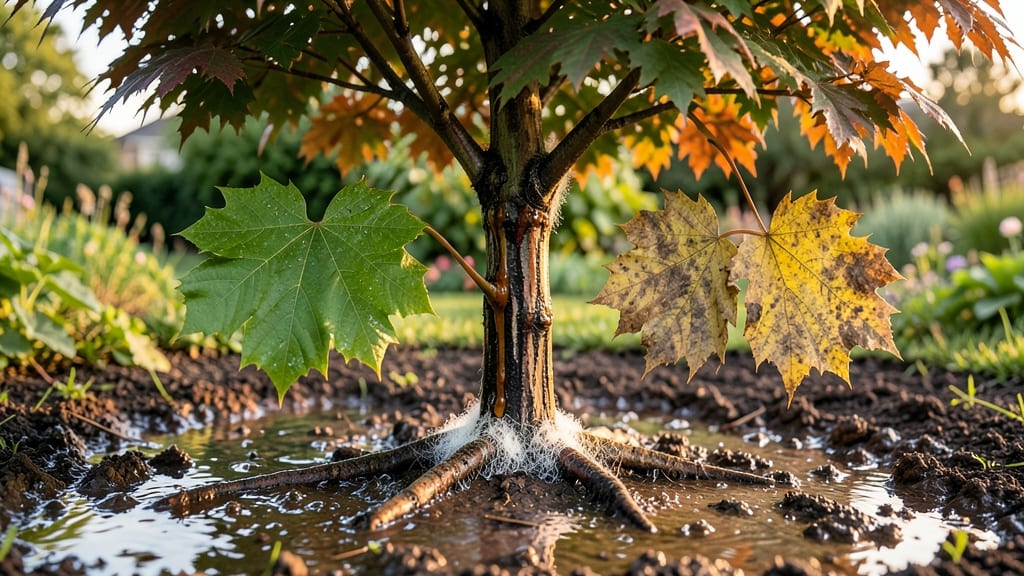
An overwatered maple tree looks like a sad, soggy mess—think droopy leaves that won’t perk up, yellowing foliage that clings stubbornly, and roots that feel mushy when you dig near them. 🌳 I’ve seen it too many times: trees that once stood tall now sagging under the weight of their own waterlogged roots, with leaves turning a sickly yellow or even dropping prematurely.
The real giveaway? That musty smell around the base when the soil stays too wet for too long.
This isn’t just about wilting—it’s about the kind of wilting. Overwatered maples often have leaves that stay limp even after days without rain, while underwatered trees might wilt but bounce back quickly when watered.
The soil around overwatered roots stays damp for hours, sometimes even developing a grayish mold or fungal growth that looks like cottony fuzz. And if you dig down just a few inches? Those roots should feel firm, not squishy like overcooked pasta.
Fixing it starts with letting the soil dry out—don’t just water again! Improve drainage by amending the soil with compost or sand, and consider raising the tree slightly if your yard holds water.
Within weeks, you’ll see new growth pushing through, leaves returning to their normal green, and that musty smell fading away. The key is balance: maples hate soggy feet but also can’t handle drought, so aim for consistently moist (not soaked) soil.
Pro tip: Stick your finger in the soil—if it’s still damp after 24 hours, you’ve overdone it. And if you’re unsure whether it’s overwatering or something else (like disease), check the roots first.
A healthy maple’s roots should smell earthy, not rotten. Once you spot the signs early, recovery is surprisingly fast—just give the tree a chance to breathe.
Root Causes Of Overwatering
Overwatering your maple tree isn’t just a gardening mistake—it’s often a chain reaction of environmental and human factors that disrupt the tree’s natural balance. Understanding these causes helps you adjust care routines before damage sets in. Let’s break down the science behind why maple trees drown in excess water.
Maple trees thrive in well-draining soil, but compacted or clay-heavy soils trap moisture like a sponge. Here’s why this happens:
- Clay or Silt Soil: These particles pack tightly, leaving tiny air pockets that suffocate roots.
Water pools around roots instead of draining, leading to anaerobic conditions (low oxygen), which maples hate. - Organic Matter Deficiency: Soil with little compost or mulch lacks structure, causing water to linger.
Maple roots need 20-30% air space to breathe—without it, they rot. - Subsurface Water Tables: If your yard sits on a high water table (common in low-lying areas), roots absorb excess groundwater even when you’re not watering.
💡 Pro Tip: Test your soil’s drainage by digging a 12-inch hole, filling it with water, and timing how long it takes to drain. If it’s slower than 4 hours, amend with perlite, sand, or compost to loosen the mix.
Even well-meaning gardeners can drown their maples with these common mistakes:
- Frequency Over Need: Maple trees only need 1–1.5 inches of water per week (including rain). Overwatering daily or assuming "more is better" forces roots to sit in soggy soil. - Ignoring Weather: Rainfall counts toward hydration! Watering on rainy days doubles moisture, leading to root suffocation.
Use a rain gauge to track totals. - Shallow Watering: A light sprinkle wets only the top inch of soil, encouraging roots to grow upward (where they’ll drown). Deep watering (6–12 inches down) trains roots to seek deeper, drier layers.
⚠️ Warning Sign: If your maple’s leaves yellow even after watering, you’re likely overdoing it. Yellowing from overwatering starts at the bottom of the tree (unlike nutrient deficiencies, which hit new growth first).
Mulch isn’t just decorative—it’s a moisture regulator. When missing or applied incorrectly, it backfires:
- No Mulch = Evaporation Trap: Bare soil dries out quickly, so you overcompensate with frequent watering.
Maple roots crave consistent moisture, not swings between drought and sog. - Too Much Mulch ("Mulch Volcano"): A 3–4 inch layer is ideal; piles deeper than that smother roots, trap heat, and create anaerobic zones.
Think of it like a root blanket—too thick, and roots suffocate. - Wrong Mulch Type: Heavy mulches (like untreated wood chips) break down into dense mats, blocking water flow. Pine straw or shredded bark are lighter and more breathable.
🔥 Quick Fix: Fluff existing mulch to aerate it, or switch to chop-and-drop mulch (shredded leaves) for better drainage.
Some overwatering triggers are out of your hands—but knowing them helps you adapt:
- Heavy Rainfall + Poor Drainage: A 5-inch rainstorm in 24 hours can saturate soil for weeks, especially in clay soils. Solution: Plant maples on slopes or mounds to encourage runoff. - Irrigation System Malfunctions: Sprinklers left on overnight or leaky drip lines can deliver 5+ inches of water in a day. Fix: Set timers to water early morning (6–10 AM) to reduce evaporation and fungal growth. - Urban Heat Islands: Pavement and buildings radiate heat, causing soil to dry faster.
You might overwater to "compensate," but roots still suffocate from heat-stressed, compacted soil. Solution: Add 2–3 inches of mulch to insulate roots.
When roots sit in waterlogged soil, three deadly processes kick in: 1. Oxygen Deprivation: Roots need oxygen to respire (like humans need air). Without it, they switch to anaerobic metabolism, producing ethanol (like alcohol), which is toxic.
- Fungal Invasion: Pathogens like Phytophthora thrive in wet conditions, clogging root vessels and blocking water/nutrient uptake.
- Nutrient Lockout: Waterlogged soil binds essential nutrients (like nitrogen and phosphorus) into forms roots can’t access, starving the tree even as it sits in "wetness."
🌡️ Temperature Matters Too: Cooler soils (below 60°F) drain slower, worsening overwatering risks. Avoid watering in late afternoon—heat helps soil dry faster.
Not all wilting or yellowing means overwatering—but these clues point to it:
- Mushy, dark brown roots when gently dug up.
- Leaves stay yellow even after drying out (unlike nutrient deficiencies, which improve with fertilizer).
- Fungal growth (white mold, slimy patches) at the base.
- Tree leans or feels "soft" at the trunk (a sign of internal rot).
✨ Final Adjustment: If your maple is already struggling, reduce watering by 50% and let the soil dry 2–3 inches deep before adding more moisture. Pair this with aerating the soil (digging small holes or using a garden fork) to restore airflow.
How to Revive Your Maple Tree
If your maple tree is struggling from too much water, don’t panic—there’s still hope! The key is acting quickly to address the root (literally!) of the problem. Below, we’ll break down the most common causes of overwatering and the practical, step-by-step fixes to get your tree back to health.
We’ll also share prevention tips to keep your maple thriving long-term.
Overwatering often starts with wilting or yellowing leaves, a sign the roots are suffocating. Here’s how to turn things around:
🔥 Step 1: Check the Soil Moisture
Before you do anything, test the soil to confirm the issue.
Stick your finger 2–3 inches deep into the soil near the tree’s base: - If it feels soggy or smells like rot, your tree is overwatered. - If it’s damp but not waterlogged, adjust your watering habits.
> 💡 Pro Tip: Use a moisture meter for accuracy—it takes the guesswork out of soil checks!
🍳 Step 2: Improve Drainage Immediately
Poor drainage is the #1 culprit behind overwatered maples. Act fast with these fixes:
- Aerate the soil with a garden fork or root aerator tool to break up compacted areas.
- Add organic matter like compost, peat moss, or coconut coir to loosen heavy clay soil.
- Install a French drain if your yard has poor natural drainage—dig a trench, fill it with gravel, and cover it with landscape fabric.
👨🍳 Step 3: Adjust Your Watering Routine
Maple trees hate soggy roots—they prefer deep but infrequent watering.
Follow this schedule: - Water deeply 1–2 times per week (depending on rain) instead of light daily sprinkles. - Water at the base, not the leaves, to prevent fungal diseases. - Avoid watering in the evening—wet foliage overnight encourages mildew.
> ✨ Prevention Tip: Mulch properly! Apply 2–4 inches of mulch (wood chips or shredded bark) 3–6 inches away from the trunk to regulate moisture and insulate roots.
If your maple’s roots are rotting or mushy, you’ll need to revive the root zone before the tree declines further.
🔪 Step 4: Prune Damaged Roots (If Necessary)
In severe cases, root rot may require root pruning to remove affected sections:
- Use sterilized pruners to trim black, mushy, or hollow roots.
- Disinfect tools with rubbing alcohol to prevent spreading disease.
- Avoid over-pruning—only remove no more than 10–15% of the root system at once.
> 💡 Pro Tip: If root rot is widespread, consider consulting an arborist—they can assess whether the tree is salvageable or needs removal.
🌡️ Step 5: Boost Root Health with Mycorrhizal Fungi
Healthy roots need helpful microbes to recover.
Try: - Mycorrhizal inoculants (available as powders or granules) to enhance root growth. - Beneficial bacteria like Bacillus subtilis to outcompete harmful pathogens. - Well-balanced fertilizer (low nitrogen, high phosphorus/potassium) to strengthen roots—look for a 10-10-10 or 5-10-10 ratio.
Once your tree is on the mend, prevent future overwatering with these habits:
| Problem | Solution | Prevention Tip |
|---|---|---|
| Heavy clay soil | Amend with sand/compost | Test soil annually |
| Poor yard drainage | Install French drains or swales | Plant on slightly elevated ground |
| Overzealous watering | Use a rain gauge or moisture sensor | Water only when top 2" of soil is dry |
| Thick mulch layers | Keep mulch 3–4 inches deep | Refresh mulch yearly |
> 🎯 Final Tip: Observe your tree! Maple trees should bounce back in 4–6 weeks if treated early. If new leaves stay yellow or the tree weakens further, root rot may be too advanced—consider professional help.
By following these steps, your maple tree can recover its strength and thrive for years to come—no soggy roots required! 🌿💚
Frequently asked questions
How can I tell if my maple tree has root rot from overwatering?
Root rot shows up as mushy, dark brown roots when you gently dig near the base. Healthy roots should be firm and light tan. Also check for a musty smell—rotten roots emit a foul odor. If the tree feels unstable or leans, the rot may have spread to the trunk.
Can overwatering cause maple leaves to curl instead of just yellow?
Yes! Overwatered maples often show cupped or curled leaves along with yellowing. This happens when roots can't absorb enough oxygen, causing stress. The curling usually starts at the edges and works inward—unlike nutrient deficiencies, which cause uniform yellowing.
Why does my maple tree's bark look swollen or cracked after overwatering?
Excess moisture creates internal pressure in the trunk, causing bark to split or swell. This is a late-stage sign of root rot. If you see oozing sap or fungal growth at the cracks, the tree is severely compromised and may need professional assessment.
Will pruning yellow leaves help an overwatered maple recover?
No—pruning won't fix the root issue, but it can help the tree focus energy on healthy growth. Remove only dead or diseased branches (they look brittle and brown inside). Avoid heavy pruning until you've corrected the watering and improved drainage.
How long does it take for a maple tree to recover from overwatering?
With proper care, you'll see improvement in 4-6 weeks. New leaves should appear green and firm. If no recovery occurs after 8 weeks, the root damage may be permanent. Early intervention is key—don't wait until the tree is completely leafless!