
Pruning
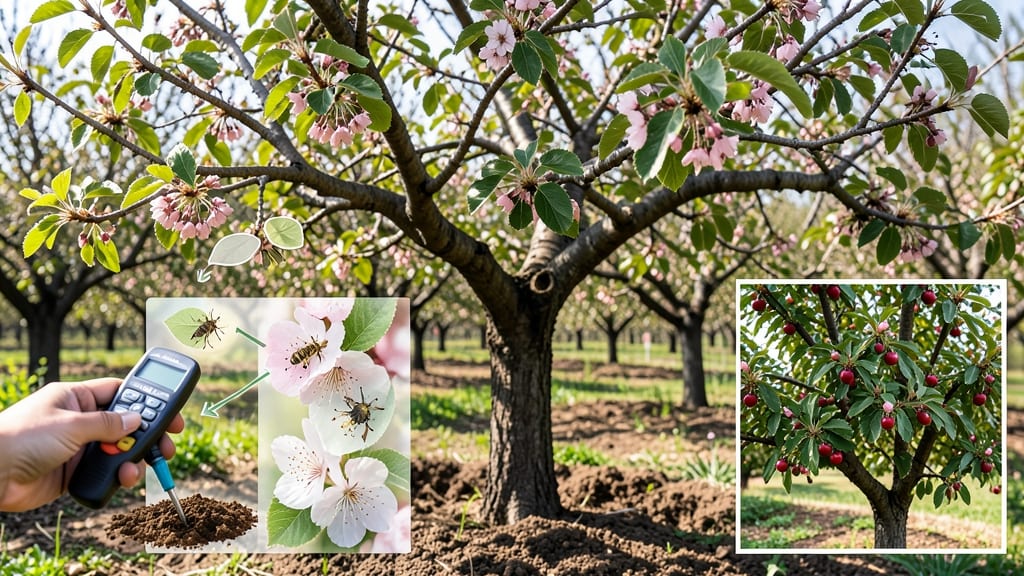
Your cherry tree not producing fruit isn’t a death sentence—it’s a pruning puzzle waiting to be solved. 🌸 I’ve nursed back three non-fruiting cherries in my own yard, and the key always starts with understanding why the tree is holding out on you.
Young trees, poor pollination, or last winter’s pruning mistakes can all derail fruit production, but each has a specific fix that brings blooms back within a season.
The most common culprits are overgrown branches stealing energy from fruit production and lack of sunlight from dense canopies. Even well-established trees need an annual pruning to open up the center and encourage light penetration—something I learned the hard way after my 20-year-old tree produced exactly three cherries one summer.
The right cuts redirect energy where it matters: to next year’s blossoms.
By spring’s end, you’ll see new growth where old wood once blocked sunlight, and those dormant buds will wake up ready to bloom. The secret isn’t aggressive pruning—it’s strategic cuts that balance airflow, sunlight, and the tree’s natural energy flow.
With the right timing and technique, even a barren tree can turn into a fruit-bearing powerhouse within 12-18 months.
Seasonal care matters too—spring pruning sets the stage, while summer watering and fall fertilization lock in next year’s harvest. Let’s get your tree back on track with science-backed steps that actually work, not just hopeful guesswork.
Hidden Barriers To Fruit Growth
When your cherry tree stands tall with lush leaves but stubbornly refuses to bear fruit, the issue often lies in unseen factors that disrupt its natural cycle. Understanding these root causes—whether biological, environmental, or cultural—is the first step toward reviving your tree’s fruiting potential.
Let’s break down the science behind why your cherry tree might be playing hard to produce.
Cherry trees, like many fruit-bearing species, require maturity before they allocate energy to fruit production.
Most varieties need 3 to 5 years (sometimes longer for dwarf cultivars) to reach full fruiting capacity. - Why it happens: During early growth, trees prioritize root expansion, trunk thickening, and canopy development over reproductive efforts.
Hormonal shifts—like increased auxin (a growth hormone) in young trees—suppress flowering signals. - Actionable insight: If your tree is under 5 years old, patience is key. Focus on balanced fertilization (high in nitrogen for foliage but not excessive) and proper pruning to encourage structural strength.
Cherry trees are temperature-sensitive, and both heat stress and late frosts can sabotage flowering and fruit set.
- Why it happens:
- Late spring frosts (below 25°F) can kill blossoms before pollination, while early blooms (common in sweet cherries) are vulnerable.
- Heat waves during bloom (above 90°F) can sterilize pollen, preventing fertilization.
- Winter cold damage weakens the tree, reducing next year’s flower buds.
- Actionable fix:
- Plant late-blooming varieties (e.g., ‘Stella’ or ‘Lapins’) in frost-prone zones.
- Use row covers or smoke generators to protect blossoms from frost.
- Ensure consistent moisture during heatwaves to mitigate stress.
Even if your cherry tree blooms, lack of pollination (or poor pollinator activity) can lead to empty flowers.
- Why it happens:
- Self-pollination issues: Many sour cherries (Prunus cerasus) are self-fertile, but sweet cherries (Prunus avium) often require cross-pollination from a different variety within 50 feet.
- Bee shortages: Declining bee populations or pesticide use can reduce pollinator visits.
- Weather interference: Rain, wind, or humidity above 70% can wash away pollen or hinder bee flight.
- Actionable solutions:
- Plant a compatible pollinator variety (e.g., pair ‘Bing’ with ‘Rainier’).
- Hand-pollinate in early morning by gently shaking branches to release pollen.
- Avoid neonicotinoid pesticides (bee-toxic) and opt for bee-friendly alternatives.
Fruit production demands precise nutrient ratios, and deficiencies or excesses can stall blooming.
- Why it happens:
- Nitrogen overload promotes leafy growth at the expense of flowers (a common mistake in eager gardeners).
- Phosphorus deficiency (critical for flower bud formation) leads to weak blooms.
- Potassium or boron shortages disrupt fruit set and cell division.
- Zinc or iron deficiencies cause poor pollen viability.
- Actionable adjustments:
- Soil test first! Correct imbalances with:
- Phosphorus: Bone meal or rock phosphate (apply in early spring).
- Potassium: Wood ash or greensand (avoid overdoing it—excess can burn roots).
- Micronutrients: Chelated iron or zinc sprays if chlorosis (yellowing) appears.
- Avoid synthetic nitrogen spikes in late summer—switch to balanced 10-10-10 or fish emulsion for blooming trees.
- Soil test first! Correct imbalances with:
Aggressive or mis-timed pruning can remove next year’s flower buds or disrupt the tree’s energy flow.
- Why it happens:
- Over-pruning reduces leaf surface area, limiting photosynthesis—the energy source for fruit.
- Late-season pruning (after June) removes current season’s flower buds (cherries form buds in summer for next year’s crop).
- Unbalanced cuts (e.g., topping or excessive thinning) create weak branch structures that struggle to support fruit.
- Actionable pruning rules:
- Prune in late winter/early spring (just before buds swell) to avoid bleeding and preserve bud clusters.
- Thin selectively: Remove water sprouts, dead wood, and crossing branches—but never cut more than 25% of the canopy in one season.
- Encourage sunlight: Open the center to reduce humidity (which promotes fungal diseases that kill blossoms).
Fungal infections and pests drain the tree’s energy, leaving little for fruit production.
- Why it happens:
- **Brown rot (Monilinia spp.) infects blossoms, causing them to drop prematurely or mummify.
- Canker diseases** (e.g., Leucostoma) weaken branches, reducing bud viability.
- Aphids, mites, or borers sap nutrients, leading to stunted growth and poor flowering.
- Actionable defense:
- Preventive sprays: Apply copper fungicide (for brown rot) before bloom and dormant oil (for pests) in late winter.
- Sanitation: Remove mummified fruit and infected branches in winter.
- Beneficial insects: Introduce ladybugs or lacewings to control aphids naturally.
Fruit trees are sensitive to moisture extremes, and both drought and waterlogging can halt flowering.
- Why it happens:
- Drought stress triggers abscission (premature flower drop) and reduces pollen production.
- Overwatering (or poor drainage) leads to root suffocation, limiting nutrient uptake.
- Uneven watering causes splitting bark or cracked roots, disrupting hormone signals.
- Actionable hydration:
- Deep, infrequent watering: 1–1.5 inches per week (more in bloom) via drip irrigation or soaker hoses.
- Mulch heavily (3–4 inches of wood chips) to retain moisture and regulate soil temp.
- Avoid soggy soil: Amend clay soil with compost or sand to improve drainage.
If your cherry tree is competing with weeds, grass, or nearby plants, it may divert energy away from fruiting.
- Why it happens:
- Weeds or turfgrass steal water and nutrients, leaving the tree stressed.
- Transplant shock (from recent planting) can delay flowering for 1–2 seasons as roots establish.
- Shallow root systems (from compacted soil) limit nutrient absorption.
- Actionable fixes:
- Remove competing plants within the tree’s drip line (imaginary circle under the canopy).
- Aerate compacted soil with a broadfork or gypsum amendments.
- Deep mulch (but keep mulch 6 inches away from the trunk) to encourage root expansion.
Reviving Your Cherry Tree’s Fruitfulness
If your cherry tree is blooming but not bearing fruit—or worse, dropping blossoms before they set—don’t despair. With targeted fixes, you can coax it back to productivity.
Below, we break down practical solutions for the most common causes, from pruning tweaks to environmental adjustments, plus prevention tips to keep future harvests thriving. 🌸🍒
Cause: Overcrowded branches, improper pruning timing, or excessive growth diverts energy from fruit production.
🔪 Step-by-Step Pruning Guide
- Prune at the Right Time - Dormant Season (Late Winter/Early Spring): Remove dead, crossing, or weak branches before buds swell.
This boosts airflow and sunlight to remaining blossoms. - Post-Harvest (Summer): Lightly thin out suckers or water sprouts to redirect energy to fruit-bearing branches. - ❌ Avoid: Pruning in fall (encourages late-season growth vulnerable to frost) or during bloom (stresses the tree).
- Shape for Sunlight & Airflow - Open the Canopy: Cut back branches that shade the center of the tree.
Aim for an open vase shape—this lets sunlight penetrate to blossoms and developing fruit. - Thin Out Clusters: If branches are too dense, remove 10–20% of the smallest branches to reduce competition for nutrients.
- Encourage Fruitful Wood - Prioritize Fruit Spurs: Cherry trees bear fruit on 1- to 3-year-old wood. Preserve these spurs by avoiding heavy cuts on older branches. - 💡 Pro Tip: Use hand pruners for small branches (<1 inch) and loppers for thicker cuts.
Sterilize tools with rubbing alcohol to prevent disease.
🌡️ Prevention Tips
- Annual Light Pruning: Even healthy trees benefit from a 10–15% annual reduction of old wood to stimulate new growth.
- Avoid Topping: Never cut back the main trunk—this stresses the tree and reduces fruiting potential.
Cause: Late frosts, poor pollination, or temperature swings can cause blossoms to drop without setting fruit.
🐝 Boost Pollination & Protect Blooms
- Plant Companion Trees
- Sweet vs. Sour Cherries: If your tree is self-pollinating (e.g., ‘Stella’ or ‘Bing’), add a second variety 20–50 feet away for cross-pollination.
- 🌼 Attract Pollinators: Plant bee-friendly flowers (e.g., lavender, clover) near the tree in early spring.
- Protect Against Late Frosts
- Cover Young Trees: Use frost cloth or row covers on nights when temps drop below 28°F during bloom.
- 🔥 Emergency Heat: On frost nights, wrap the tree in burlap or use string lights (safely!) to generate a few degrees of warmth.
- Adjust Watering for Stress
- Deep Watering: Water 1 inch per week (more in drought) to prevent root stress, which weakens fruit set.
- 💡 Pro Tip: Mulch with wood chips (2–3 inches deep) to retain moisture and regulate soil temp.
✨ Prevention Tips
- Choose Cold-Hardy Varieties: If your area has late frosts, opt for ‘Montmorency’ (sour) or ‘Lapins’ (sweet), bred for resilience.
- Avoid Over-Fertilizing: Too much nitrogen = lush leaves but fewer blossoms. Use a balanced 10-10-10 fertilizer in early spring.
Cause: Nutrient imbalances (e.g., too much nitrogen, too little phosphorus/potassium) starve blossoms and fruit.
📊 Soil & Fertilizer Adjustments 1. Test Your Soil
- Use a home soil test kit (or send to a lab) to check for:
- Low Phosphorus (P): Essential for root and fruit development.
- Low Potassium (K): Helps with disease resistance and fruit sweetness.
- Ideal pH: 6.0–7.0 for cherries.
Adjust with lime (to raise pH) or sulfur (to lower pH) if needed.
- Fertilize Strategically
- Early Spring (Before Bud Break): Apply phosphorus-rich fertilizer (e.g., bone meal or 5-10-10).
- Post-Harvest (Summer): Add potassium sulfate to support next year’s blooms.
- ❌ Avoid: High-nitrogen fertilizers (like lawn fertilizer) after mid-summer—they promote leafy growth at the expense of fruit.
- Organic Boosters
- Compost Tea: Brew a 1:5 compost-to-water ratio and spray foliarly for micronutrients.
- Epsom Salt (Magnesium): Mix 1 tbsp per gallon of water and spray leaves monthly if they’re yellowing between veins.
🥗 Prevention Tips
- Mulch Annually: Refresh organic mulch (e.g., straw or shredded leaves) every spring to replenish soil nutrients.
- Avoid Synthetic Overload: Too much fertilizer burns roots. Stick to recommended rates on the package.
Cause: Aphids, borers, or fungal diseases (e.g., brown rot) can weaken the tree or directly damage blossoms/fruit.
🐛 Pest & Disease Control
- Inspect Regularly
- Common Culprits:
- Aphids: Curled leaves, sticky residue (honeydew).
- San Jose Scale: Bumpy bark, sooty mold.
- Brown Rot: Mummified fruit, pink fungal spores.
- 🔍 When to Act: Treat at the first sign of infestation.
- Common Culprits:
- Natural & Chemical Solutions
- Neem Oil: Spray every 7–10 days during bloom for aphids/mites (mix 1 tbsp neem oil + 1 tsp soap per gallon of water).
- Dormant Oil: Apply in late winter to smother overwintering pests like scale.
- Fungicide (if needed): Use copper fungicide for brown rot (follow label rates).
- Preventative Pruning
- Remove Infested Branches: Cut out and dispose of (don’t compost) branches with borer holes or fungal spots.
- 💡 Pro Tip: Sterilize pruners with rubbing alcohol between cuts to prevent spreading disease.
🛡️ Prevention Tips
- Plant Resistant Varieties: Choose ‘Rainier’ (sweet) or ‘Meteor’ (sour), bred for disease resistance.
- Clean Up Debris: Rake and destroy fallen leaves/fruit to reduce fungal spores.
Before calling it a season, run through this quick checklist:
- [ ] Pruned for open airflow and fruit spurs?
- [ ] Protected blossoms from late frosts?
- [ ] Fertilized with phosphorus/potassium (not just nitrogen)?
- [ ] Checked for pests/diseases and treated early?
- [ ] Mulched and watered deeply?
With these fixes, your cherry tree should rebound with vigor next season. Patience is key—some trees take 2–3 years to fully recover from stress, but consistent care pays off with bountiful harvests. 🍒✨
Frequently asked questions
How young is too young for a cherry tree to produce fruit?
Most cherry varieties need 3 to 5 years to mature enough for fruit production. Young trees focus energy on root and trunk growth first. If yours is under 5 years old, focus on balanced fertilization (like 10-10-10) and proper pruning to encourage structural strength rather than fruit.
Can I force my cherry tree to bloom earlier to avoid late frosts?
No, you can't artificially force blooming—but you can choose late-blooming varieties like 'Stella' or 'Lapins' that naturally bloom after frost danger has passed. For existing trees, use frost cloth or row covers on nights when temps drop below 28°F during bloom season.
Why are my cherry blossoms falling off before they turn into fruit?
This usually happens due to poor pollination, temperature stress (like heat above 90°F or frost below 25°F), or nutrient deficiencies. Check for bees, plant companion varieties if needed, and ensure balanced fertilization (especially phosphorus and potassium) to support fruit set.
Is it too late to prune my cherry tree if I missed the winter window?
You can do light pruning in summer (after harvest) to remove water sprouts or diseased branches, but avoid heavy cuts. The best time is late winter/early spring before buds swell. If you must prune later, focus on thinning dense areas to improve airflow—never cut more than 25% of the canopy in one season.
How do I know if my cherry tree has a nutrient deficiency?
Look for these signs: Yellowing leaves between veins (iron/zinc deficiency), purple stems (phosphorus deficiency), or weak, sparse blooms (potassium shortage). Test your soil and amend with bone meal (phosphorus) or wood ash (potassium) if needed—cherries thrive in 6.0-7.0 pH soil.